

At a time when global energy shortages and environmental pollution continue to intensify, the demand for high-efficiency thermal insulation materials in the industrial field has become the core direction of technological innovation. Data shows that in the crude oil pipeline transportation link alone, the energy loss caused by heat dissipation accounts for about 1/3 of the total energy consumption each year, which not only causes huge energy waste, but also increases the viscosity of crude oil, deteriorates fluidity, and even affects the quality of oil products. The traditional "rock wool insulation board + galvanized protective layer" protection system faces multiple technical bottlenecks: the thermal conductivity of rock wool increases significantly after absorbing water, and the insulation effect is reduced by up to 40%; dust pollution is easily generated during the construction process, and long-term use will cause corrosion under the insulation layer and rust on the protective layer.
Content
1. Technical background and research significance
2. Coating preparation process and formula design
3. Performance testing and supporting protection system
4. Industrial application scenarios and benefit analysis
5. Technical challenges and future development paths
6. Conclusion
1. Technical background and research significance
Aerogel is a porous material composed of nano-scale holes. Its special spatial mesh structure gives it excellent thermal insulation performance - the thermal conductivity is as low as 0.01-0.02W/(m・K), which is only 1/3 of traditional rock wool. In this structure, countless pore walls form a reflective surface for thermal radiation, and the air in the pores is effectively bound, while blocking the solid heat conduction path, thereby achieving a "three-dimensional thermal insulation" effect. The research of Yuan Xuesong's team shows that the composite of nano-SiO₂ aerogel and water-based acrylic acid system can prepare a new type of coating with both high-efficiency thermal insulation and green environmental protection characteristics, providing a breakthrough solution for the fields of petroleum, petrochemicals, and building energy conservation.
2. Coating preparation process and formula design
The coating is prepared using the "graded dispersion-synergistic compound" process. The core raw materials include: Wanhua Chemical's water-based acrylic emulsion A, Shenzhen Zhongning Technology's SiO₂ aerogel powder, 3M's hollow glass microspheres, and Shanghai Huijingya's ceramic microspheres. The specific preparation steps are as follows:
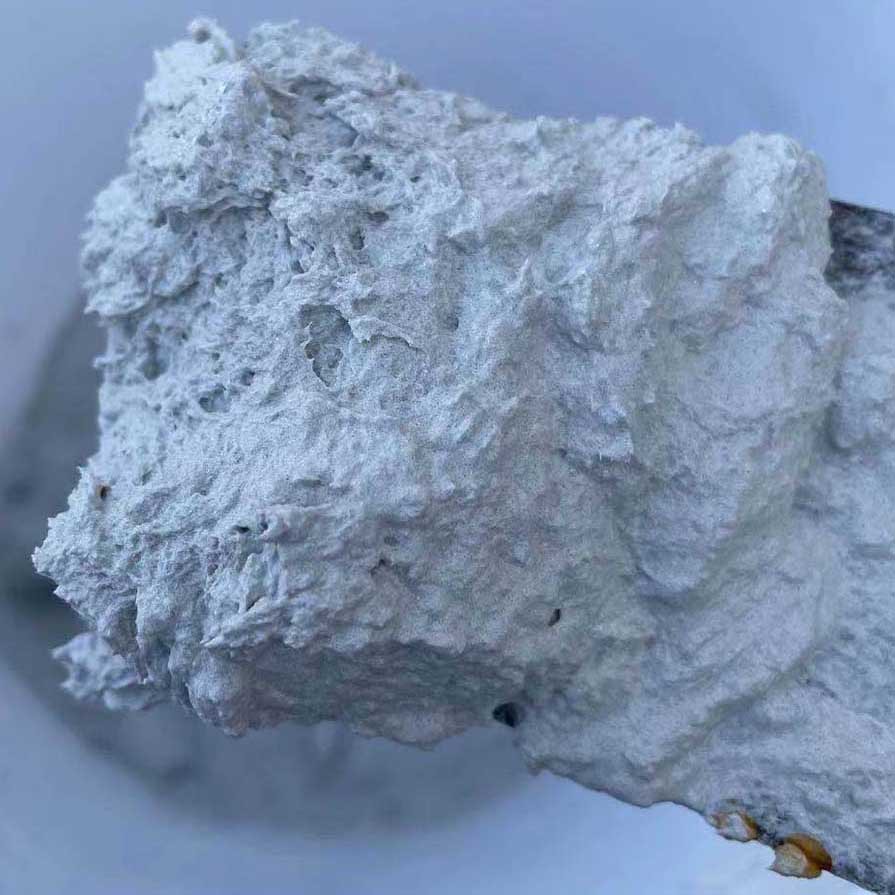
First, add silane coupling agent and wetting dispersant to deionized water, slowly add aerogel powder under low-speed stirring at 500r/min, and then disperse at a high speed of 3000r/min for 30-50 minutes to form a uniform slurry of aerogel particles in water. The key to this step is to use high-speed shear force to break the agglomeration of aerogels and ensure nano-level dispersion.
Then, add acrylic emulsion and deionized water to the slurry in proportion, stir at 800-1000r/min for 10-15 minutes to form a stable colloidal system. Finally, hollow glass microspheres, ceramic microspheres and other functional fillers are added, and the mixture is dispersed at a low speed of 700-900r/min for 15-20 minutes to prevent the fillers from breaking and affecting the thermal insulation performance.

Key parameters for formula optimization
In the optimization of aerogel coating formula, aerogel content has an obvious critical effect. Experiments show that when the mass fraction of aerogel is 5%, the thermal conductivity can be reduced to 0.042W/(m·K), and the thermal insulation temperature difference of 5mm coating at 80℃ is 30℃, which is the best effect. However, when the content exceeds 7%, it will cause shrinkage cracking, and when it exceeds 10%, the structure will collapse due to insufficient coating of aerogel particles, and the thermal conductivity will increase instead.
In terms of functional fillers, the 1:1 compounding of glass microspheres and ceramic microspheres has excellent effect, with a thermal conductivity of 0.045W/(m·K) and an adhesion of 1.56MPa. Glass microspheres provide thermal insulation through the internal hollow structure, while ceramic microspheres fill the pores to enhance the tightness of the structure. If kaolin is used to replace ceramic microspheres, the adhesion is increased to 1.76MPa, but due to its strong thermal conductivity, the thermal conductivity increases to 0.050W/(m·K), which is not conducive to thermal insulation performance.
The regulation of the pigment-to-base ratio has a significant impact on the film quality of the coating. When the pigment-to-base ratio is 0.64, the coating has the lowest thermal conductivity and good adhesion (1.58MPa). However, when it is increased to 0.90, the latex content decreases, the filler is not fully covered, and microcracks are formed, which increases the thermal conductivity to 0.049W/(m·K) and the adhesion also drops to 0.93MPa. Therefore, a reasonable balance of the filler and latex ratio is the key to achieving thermal insulation and structural stability.
3. Performance testing and supporting protection system
Multi-dimensional performance index analysis
Thermal insulation and mechanical properties:
- The thermal conductivity test adopts HG/T 5182 standard. The results show that the thermal conductivity of the coating with optimized formula is 0.042W/(m・K), which is better than the industry standard (≤0.05W/(m・K)).
- In the mechanical performance test, the coating bending test can reach 1mm (GB/T 6742), impact resistance 40kg・cm (GB/T 1732), and pull-off adhesion 1.58MPa (GB/T 5210), all of which exceed the conventional thermal insulation coating indicators.
The matching coating system (water-based epoxy primer + aerogel insulation layer + water-based acrylic topcoat) has been rigorously tested:
- Acid resistance (GB/T 9274 Method A) is no abnormality for 240 hours, and alkali resistance is no blistering or shedding for 168 hours;
- Salt spray resistance (GB/T 1771) After 240 hours, there is no rust on the coating surface;
- Resistance to artificial accelerated aging (GB/T 1865) for 500 hours, and the performance remains stable.
Collaborative design of anti-corrosion supporting system
The supporting system adopts "three-layer protection logic":
- The bottom layer of water-based epoxy primer contains active epoxy groups, which can form chemical bonds with the metal substrate, with an adhesion of more than 5MPa, while isolating electrolyte penetration;
- The middle aerogel insulation layer achieves thermal barrier through nanoporous structure, and its porous characteristics can also absorb a small amount of infiltrated corrosive media;
- The surface layer of water-based acrylic topcoat has hydrophobic groups, which can block external corrosion sources such as rain and salt spray, and has a light reflectivity of more than 80%, reducing coating aging.
4. Industrial application scenarios and benefit analysis

After the coating was applied to an oil pipeline in an oil field, the surface temperature of the pipeline was maintained above 25°C at an ambient temperature of -10°C, which was 15°C higher than the traditional rock wool insulation layer, the crude oil viscosity was reduced by 30%, and the pumping energy consumption was reduced by 22%. Based on an annual oil output of 500,000 tons, 3,200 tons of fuel can be saved each year, equivalent to an energy saving cost of approximately 1.8 million yuan.
In a 50,000 cubic meter crude oil storage tank, the application of aerogel coating solves two major technical problems: first, the oil temperature fluctuation in the tank is controlled at ±2°C through efficient insulation to prevent the crude oil from solidifying due to low temperature; second, the supporting coating system reduces the corrosion rate of the inner wall of the storage tank from 0.12mm/year to 0.03mm/year, extending the maintenance cycle to more than 5 years, and reducing the cost of a single maintenance by 60%.
Analysis of the two dimensions of environmental and economic benefits
Aerogel water-based coatings have significant green and environmentally friendly characteristics. Compared with traditional solvent-based coatings, they do not contain harmful substances such as benzene and formaldehyde, and VOC emissions are almost zero. In a petrochemical base application, its construction process increased the air quality compliance rate in the work area by 92%, meeting the requirements of the National "Emission Standards for Air Pollutants in the Coating Industry" (GB 37824-2019), reflecting good environmental friendliness.
From an economic perspective, aerogel coatings show strong cost advantages throughout their life cycle. Although the initial investment is slightly higher (180 yuan/㎡), due to its strong durability and only one construction, plus annual energy savings of about 25 yuan/㎡ and maintenance costs of 15 yuan/㎡, a net profit of 120 yuan/㎡ can be achieved within a 10-year cycle, with an input-output ratio of 1:1.67, which is better than the replacement and maintenance costs of traditional rock wool systems.
5. Technical challenges and future development paths
The industrialization of aerogel coatings faces two major bottlenecks: one is the high cost, which is mainly due to the large investment in supercritical drying equipment and the reliance on imported silicon source raw materials; the other is the poor construction adaptability. Traditional spraying can easily damage the aerogel structure, and there is a problem of uneven thickness in the construction of special-shaped parts.
The future development direction focuses on technological breakthroughs and application innovation. On the one hand, the promotion of atmospheric pressure drying technology and bio-based silicon source substitution is expected to reduce costs by more than 70%; on the other hand, functional expansion becomes the key, such as grafting thermosensitive polymers to construct intelligent temperature control coatings, which can adjust porosity according to temperature changes and improve heat dissipation efficiency; at the same time, the self-healing coating releases repair agents through microcapsules to achieve automatic crack repair and enhance service life and reliability. These innovative paths provide feasible solutions for the large-scale promotion of aerogel coatings.

6. Conclusion
Aerogel water-based thermal insulation coatings have broken through the performance boundaries of traditional thermal insulation materials through the innovative combination of nanomaterials and water-based polymers. Its thermal conductivity of 0.042W/(m・K) and adhesion of 1.58MPa achieve the performance synergy of "high-efficiency thermal insulation - strong and tough combination", and the supporting protection system solves the corrosion problem in the industrial field. Driven by the "dual carbon" goal, this technology not only provides a practical solution for energy saving and cost reduction for the petrochemical industry, but also promotes the development of thermal insulation materials towards green and intelligent directions. With the in-depth research on atmospheric pressure preparation technology and functional modification, aerogel coatings are expected to open up a broader application space in the fields of building energy conservation, new energy equipment, etc., and become one of the key materials supporting the energy revolution.