

Aerogel, with its unique nanoscale porous structure and excellent performance, is becoming a key breakthrough in the innovative development of the textile industry. Among them, silica aerogel, with its low density, high porosity, excellent thermal insulation and other characteristics, has set off a research boom in the field of textile functional modification, giving textiles new performance and application possibilities, and reshaping the industry development pattern.
Content
1. Preparation of SiO₂ aerogel: key links from foundation to application
2. "Performance revolution" in the textile industry: core application value of aerogel
3. Opportunities and challenges: realistic dilemma of aerogel textile application
4. Breakthrough and outlook: future path of aerogel textile
1. Preparation of SiO₂ aerogel: key links from basics to applications

The preparation of SiO₂ aerogel is based on the sol-gel method, which goes through four key steps: sol formation, gelation, solvent replacement, and drying. First, the silicon source is hydrolyzed and polycondensed in the solvent to form a uniformly dispersed sol system; then, the sol is gelated to construct a three-dimensional network structure, initially locking the aerogel "skeleton"; then, through solvent replacement , the structure is prevented from being destroyed by surface tension during drying; finally, supercritical or atmospheric drying is performed to remove the pore liquid to obtain a porous solid with a high specific surface area and a low density.
This process requires strict reaction accuracy, and temperature, pH value, and catalyst type directly affect the gel structure. For example, acidic conditions promote hydrolysis, alkaline conditions accelerate polycondensation, and dynamic regulation is required to achieve uniform network construction. The maturity of the preparation process determines whether aerogel can stably empower textiles - only by accurately controlling the microstructure can subsequent textile applications have both functionality and durability.
2. The "Performance Revolution" in the Textile Industry: The Core Application Value of Aerogel
Thermal Insulation Performance: Breaking Through the Limits of Traditional Fabrics
Traditional thermal insulation fabrics are limited by their structure and it is difficult to balance "lightweight" and "efficient thermal insulation". The nanoporous structure of SiO₂ aerogel can efficiently bind air molecules, making its thermal conductivity as low as 0.01-0.02W/(m・K), which is much better than down.
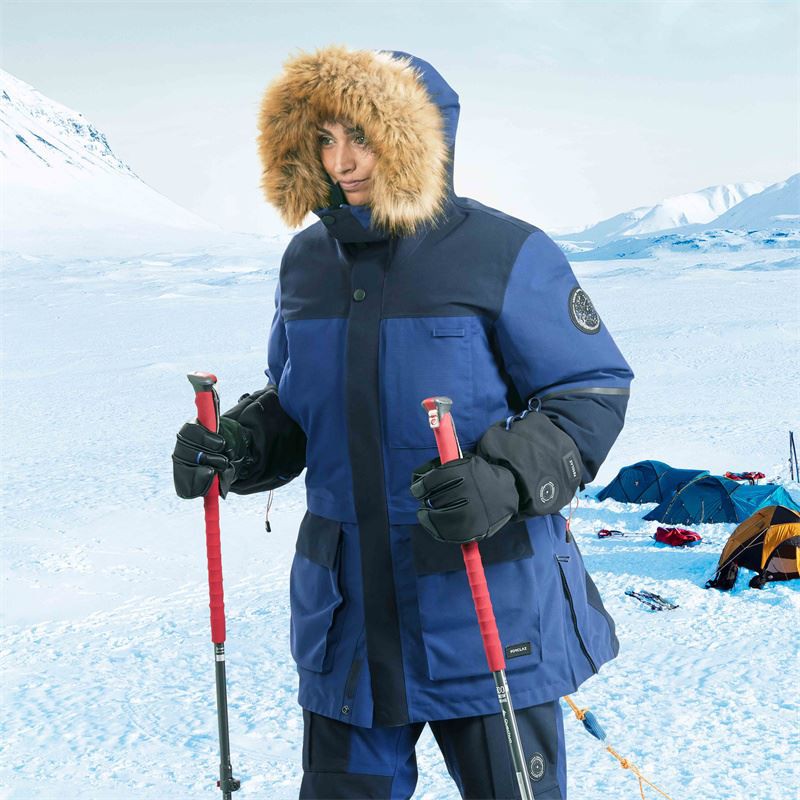
In outdoor clothing, aerogel coating or filling fabrics can achieve "ultra-thin, ultra-light but ultra-warm" - ski suits are added with aerogel interlayers, and the thickness is reduced by 30% to still withstand -20℃ severe cold; polar expedition suits are integrated with aerogels, and the weight is reduced by 40%, helping team members to work flexibly. Even in daily home textiles, aerogel can make "energy saving and warmth" a reality: aerogel curtains can reduce indoor and outdoor heat exchange, reduce air conditioning energy consumption in summer, and retain heating temperature in winter.
The surface modifiability of aerogel makes it the "core element" of smart textiles. By grafting thermosensitive and moisture-sensitive groups on the surface of aerogel, the fabric can be given environmental perception ability: in sportswear fabrics, aerogel will trigger slight structural changes when encountering sweat , actively expanding pores to accelerate heat dissipation; when encountering low temperatures , the pores will shrink and lock in heat.
More innovative is the "energy interaction" application - aerogel is composited with piezoelectric fibers. When the human body moves and squeezes the fabric, the deformation of the aerogel pores can generate electricity in coordination with the piezoelectric effect, continuously powering smart wearable devices , making clothing a "wearable energy station" and promoting the upgrade of textiles to "active intelligence".
Protection upgrade: "Safety armor" for extreme environments
In the field of special protection, aerogels show the potential of "all-round protection":
- Fire suits: Aerogel coatings can withstand high temperatures above 800℃, and a 10mm thick coating can block more than 90% of the heat, buying critical rescue time for firefighters while reducing the heavy burden of traditional insulation layers ;
- Industrial protective clothing: In the face of chemical corrosion and dust pollution, the porous structure of aerogels can load anti-corrosion and filtration functional additives, forming a "protective film" on the surface of the fabric, which not only isolates harmful substances but also maintains breathability;
- Military camouflage clothing: Aerogels can adjust the reflection characteristics of infrared and radar waves, and through structural design, the fabrics can be "spectrally matched" with the environment, helping to achieve stealth protection for military equipment.
3. Opportunities and Challenges: The Real Dilemma of Aerogel Textile Application
Cost Barrier: The Gap from Laboratory to Market
Currently, the cost of preparing SiO₂ aerogel remains high , mainly due to:
- Complex process: supercritical drying equipment is expensive , and production efficiency is low ;
- Raw material dependence: high-purity silicon sources account for more than 60% of the raw material cost, and alternative raw materials are prone to fluctuations in aerogel performance.
This directly pushes up the price of textile products - the price of aerogel thermal underwear is 3 times higher than that of ordinary products, which limits mass market penetration and urgently needs to develop low-cost preparation technology .
Process adaptation: "Compatibility problem" of textile production line
The composite process of aerogel and textile fiber is not yet mature:
- Poor dispersion: aerogel nanoparticles are easy to agglomerate, blocking equipment during spinning and weaving, resulting in yarn breakage and fabric defects;
- Mechanical conflict: aerogel itself is brittle , and after being composited with flexible fibers, the fabric is prone to "stratification and powder loss", affecting durability;
- Finishing bottleneck: traditional dyeing and shaping processes will destroy the aerogel structure , and exclusive finishing technology needs to be developed.
Lack of standards: "gray area" of market regulations
Aerogel textile products lack unified standards:
- Performance indicators are not clearly defined, and enterprise labeling is confusing ;
- Safety certification is blank, and there is insufficient biocompatibility data for aerogel in contact with human skin and long-term wear, which makes consumers have many concerns.


4. Breakthrough and Outlook: The Future Path of Aerogel Textiles
Technological Innovation: Double Breakthroughs in Cost Reduction and Performance
- Preparation: Promote atmospheric pressure drying aerogel technology , which can reduce costs by 70%; explore bio-based silicon sources , and cut raw material costs in half.
- Application: Develop aerogel fiber in-situ growth technology to allow aerogels to be "in-situ synthesized" during the spinning process to solve the problem of dispersion; improve mechanical compatibility with fibers through interface modification , so that the fabrics are both functional and durable.
Scenario expansion: from "niche" to "universal"
In addition to the outdoor and protective fields, aerogel textiles can penetrate into daily rigid needs:
- Mother and baby textiles: aerogel baby clothes are both lightweight and warm and antibacterial , protecting the health of newborns;
- Medical textiles: aerogel bandages use high porosity to accelerate wound healing, while heat insulation to avoid secondary infection;
- Smart home: aerogel wall coverings and carpets create "passive energy-saving spaces" and reduce building energy consumption by more than 30%.
Ecological construction: standards, industry and market collaboration
- Promote the formulation of industry standards, clarify the performance test methods of aerogel textile products and safety certification processes;
- Create an industrial chain alliance, integrate silicon source enterprises, aerogel manufacturers, and textile factory resources, share technology, and share costs;
- Strengthen market education, and let consumers understand the "high performance behind high value" and accept price differences through popular science experiences .
Aerogel has opened up a new track of "super-performance fabrics" for the textile industry. From preparation technology breakthroughs to application scenario expansion, from cost optimization to ecological construction, each step is full of challenges, but it also breeds opportunities to subvert traditional textiles. In the future, when aerogel textile products truly achieve "high performance, low cost, and universalization", it will not only change clothing, but also reshape the "cloth logic" in related fields such as smart home and medical health, allowing the textile industry to move towards a new future of "unlimited functions" driven by new materials.