Nanoscale thermal insulation barrier: The porosity of aerogel is as high as 80%-99.8%. The nanoscale pores (<70nm) block air convection and form a "three-dimensional thermal barrier" in combination with the radiation reflection structure of the fiber skeleton.
Material composite technology: Through supercritical drying or atmospheric drying process, aerogel is composited with glass fiber, ceramic fiber, etc. to solve the brittleness problem of aerogel while keeping the thermal conductivity as low as 0.015–0.03 W/(m·K) (normal temperature).
Multi-scenario adaptability: Depending on the type of reinforcing fiber, the product temperature range covers 300℃ to 650℃, and special carbon aerogel can reach 2000℃ in an inert environment.
Aerogel Insulation Blankets: Material Properties, Applications, Performance Parameters, and Price Guide
Aerogel Insulation Blanket Material Properties and Basic Advantages
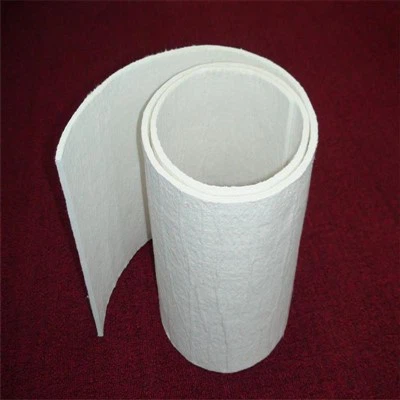
Aerogel insulation blanket is a highly efficient thermal insulation product made with silica aerogel as its core material. It combines the structural characteristics of aerogel blanket insulation with excellent thermal insulation performance. As a new type of microporous blanket thermal insulation sheet, its porous structure, formed through a special process, effectively blocks heat transfer, making it a key thermal insulation material. This material is not only lightweight but also flexible, making it easy to cut and install, making it suitable for insulation needs in a variety of complex environments.
Wide Applications of Aerogel Insulation Blankets
Aerogel insulation blankets have a wide range of applications. In the construction industry, aerogel building insulation blankets are commonly used for thermal insulation projects in walls, roofs, and other areas. Using this material in wall insulation can significantly improve building energy efficiency. It also performs well in cryogenic applications, meeting the insulation needs of low-temperature environments. Some aerogel blankets also offer dual functions as sound absorption and thermal insulation, making them suitable for locations requiring both.
Core Performance Parameters of Aerogel Blankets
From a performance perspective, aerogel blankets offer exceptional thermal insulation, with heat insulation efficiency far exceeding that of traditional insulation materials. The R-value (r-value chart) is a key indicator of thermal insulation capacity, with higher values indicating improved insulation effectiveness. As a versatile material, aerogel blankets maintain the ultra-low thermal conductivity of aerogel while offering enhanced practicality due to their blanket form. They can operate stably across a wide range of temperatures, providing long-lasting thermal protection for various equipment and structures.
Price and Selection Considerations for Aerogel Blankets
The price of aerogel blankets varies depending on product specifications, performance parameters, and application scenarios. Compared to polyurethane insulation (polyurethane insulation vs. aerogel blankets), their initial cost may be higher, but they offer more significant energy savings over the long term. For users who want to understand this product, clarifying what aerogel blanket insulation is will help them better choose the appropriate type. Whether it is used in ordinary buildings or special environments, its comprehensive cost-effectiveness must be considered in combination with actual needs.
| Aerogel Blanket Physical Properties | |
| Thermal Conductivity (25°C) | 0.018 - 0.057 W/m.k |
| Type | Roll or Mat |
| Temperature Range | \-200°C to 650 °C |
| Hydrophobicity | ≥99.5 |
| Width | 150cm |
| Density | ≤200 kg/m3 |
| Tensile Strength | 800-1000 Kpa |
| Combustion Performance Grade | A |
Application
1. Industrial energy saving: high-temperature pipelines and equipment
Petrochemical: After using aerogel blankets on 465℃ steam pipelines, the annual energy saving benefits per kilometer reached 4.81 million yuan, and carbon dioxide emissions were reduced by 5,000 tons.
Metallurgy and electricity: The blast furnace hot blast furnace uses ceramic fiber reinforced aerogel blankets, which are resistant to 1000℃ and thermal shock, and the service life is extended to 15 years.
2. New energy safety: power battery protection
Battery cell insulation: Aerogel pads with a thickness of 2-5mm can delay the spread of flames for more than 15 minutes, meet the GB38031-2020 standard, and replace mica sheets to reduce weight by 50%.
Battery cabin fire protection: Aerogel blankets can withstand 1000℃ flames for 5 minutes, and the back temperature is less than 200℃, which buys time for passengers to escape.


3. Building Energy Saving: Green Building Revolution
Exterior wall insulation: 3mm aerogel blanket is equivalent to 150mm polystyrene board, with fire rating A1, and has been included in China's "Green Building Evaluation Standards".
Floor heating system: Ultra-thin design saves 5cm of floor height, and there is no risk of mold growth, suitable for severe cold areas (such as Northeast China).
4. Special environment: deep cold and aerospace
LNG storage tank: Aerogel blanket has a bending radius of <50mm at -162℃, and the cold loss is reduced by 30%, replacing the traditional polyurethane + glass wool combination.
Aerospace: NASA Mars rover uses aerogel blanket to achieve wide temperature range insulation from -200℃ to 1200℃, and the weight is only 1/10 of traditional materials.


Aerogel Insulation Blanket Selection suggestions:
High temperature scenario: Ceramic Fiber aerogel blanket + ceramic fiber backing layer is preferred to form a double-layer thermal barrier.
Low temperature deep cooling: Fiberglass aerogel blanket + vacuum insulation layer is used to reduce the cold loss by another 15%.
New energy field: Pre-Oxidized PAN aerogel pad + fireproof coating is recommended to take into account both heat insulation and flame retardancy
| Type | Reinforcing Fiber | Temperature Range | Thermal Conductivity (at 25°C) | Advantages & Limitations |
| Fiberglass Aerogel | Glass fiber | -200°C to 650°C | 0.015–0.03 W/(m·K) | Excellent flexibility, cost-effective; limited high-temperature resistance |
| Ceramic Fiber | Ceramic fiber | >600℃ | 0.020–0.025 W/(m·K) | Exceptional thermal shock resistance, high-temperature durability; higher cost |
FAQ:
1.Why is Aerogel Insulation Blanket more efficient than traditional insulation materials?
Its nano-aerogel structure (porosity >80%) blocks heat conduction and radiation, with thermal conductivity as low as 0.015 W/(m·K) (25℃), 1/3 that of rock wool. Ultra-thin design (1–20mm) achieves same insulation as 3–5 times thicker traditional materials.
2: How to choose between Fiberglass, Pre-Oxidized PAN, and Ceramic Fiber Aerogel Blankets?
Fiberglass: For -200℃–650℃ (pipes, buildings), flexible & cost-effective.
Pre-Oxidized PAN: Best for -180~450℃ (battery cells), lightest with lowest thermal conductivity (0.012 W/(m·K)).
Ceramic Fiber: Suits 600℃–1000℃ (furnaces), withstands thermal shock.
3: What solutions does Aerogel Blanket offer for new energy vehicles?
As battery cell insulation, 2–5mm pads delay thermal runaway by >15 min (meets GB38031), reduce weight by 50% vs. mica sheets. For battery compartments, it resists 1000℃ flames for 5 min, keeping backside temp <200℃.
4: What precautions should be taken during installation?
Use waterproof coatings (e.g., aluminum foil) in humid environments. Wear gloves/masks to avoid fiber irritation. Overlap seams by 5–10cm and fix with high-temperature straps to prevent heat bridges.
Hot Tags: aerogel insulation blanket, China aerogel insulation blanket manufacturers, suppliers, factory, 5mm Fiberglass Aerogel Blanket, 3mm Fiberglass Aerogel Blanket, 2mm Fiberglass Aerogel Blanket, 6mm Fiberglass Aerogel Blanket, 10mm Fiberglass Aerogel Blanket, fiberglass aerogel blanket