

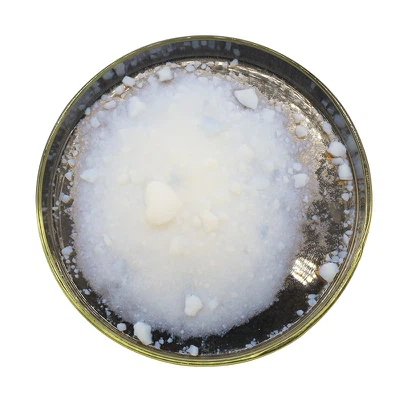
The Nanoscale Powerhouse from Zhejiang Runhui
Zhejiang Runhui New Materials Co., Ltd., located in the Longyou Economic Development Zone of Zhejiang Province, China, has established itself as a global frontrunner in aerogel-based solutions since its founding. Specializing in the research, production, and distribution of nanomaterial-based insulation products, Runhui combines cutting-edge R&D with large-scale manufacturing capabilities to deliver premium aerogel powders that meet the rigorous demands of modern industries. The company operates state-of-the-art facilities equipped with automated production lines, enabling an annual output of over 10,000 metric tons of aerogel powder, supported by a team of 200+ engineers and technicians dedicated to material innovation.
Runhui's Aerogel Powder
At the core of Runhui's product portfolio is its Silica Aerogel Powder, a nanoporous material composed of over 95% air by volume, with a particle size distribution ranging from 5 to 50 micrometers. Produced via a proprietary sol-gel process followed by supercritical drying, this powder features a three-dimensional network of silica nanoparticles, creating an ultra-low density of 0.1–0.3 g/cm³ and an exceptional thermal conductivity as low as 0.012 W/m·K at room temperature-properties that outperform traditional insulating materials.
Key technical specifications:
Pore Structure: Average pore diameter of 20–50 nm, suppressing convective heat transfer within the nanoscale voids
Chemical Stability: Resistance to pH 2–12, making it suitable for harsh chemical environments
Temperature Range: Operational stability from -200°C to +600°C, with short-term resistance up to 1,000°C
Hydrophobic Modification: Optional surface treatment reduces water absorption to <1%, critical for moisture-sensitive applications
Runhui's powder is available in both raw and functionalized forms, with hydrophobic coatings, particle size grading, and surface modifications for specific industrial needs.
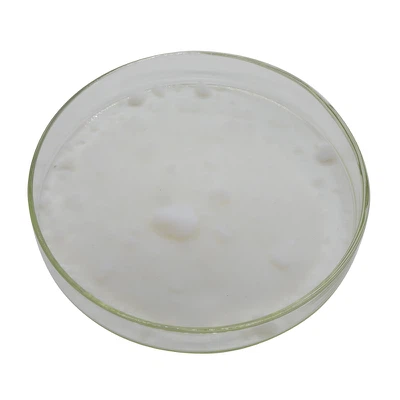
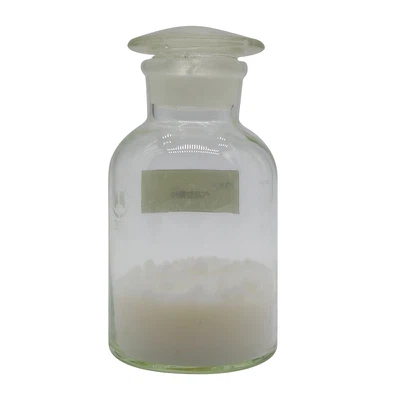
Low Thermal Conductivity Aerogel Powder
The defining feature of Runhui's Aerogel Powder is its unparalleled thermal insulation capability, derived from three synergistic mechanisms:
Nanoporous Barrier: The tiny pore size (smaller than the mean free path of air molecules, ~70 nm at standard pressure) minimizes convective heat transfer, effectively "trapping" air at the nanoscale.
Amorphous Silica Skeleton: The disordered silica network reduces conductive heat flow, with solid-phase conductivity contributing less than 15% of total heat transfer.
High Porosity: The ultra-light structure limits radiative heat transfer in high-temperature applications, making it a versatile solution for both cryogenic and high-heat environments.
Industrial Furnace Insulation: When mixed with refractory binders, Runhui's powder creates lightweight insulating bricks that reduce heat loss by 40% compared to traditional fireclay bricks. A steel mill case study showed that replacing conventional insulation with aerogel-enhanced materials on a 500°C furnace reduced energy consumption by 25%, equivalent to saving 500 metric tons of coal annually.
Battery Thermal Management: In lithium-ion battery packs, the powder is used in phase change materials (PCMs) to absorb excess heat during charging, maintaining cell temperatures within the optimal 25–45°C range. This extends battery cycle life by 20% and mitigates thermal runaway risks.
Aerospace Thermal Barriers: For satellite components, thin coatings of aerogel powder composite protect against extreme temperature fluctuations (-196°C to +120°C), ensuring stable operation in space without adding significant payload weight.
Industrial Filler Material
Runhui's Aerogel Powder has become a preferred filler in composite materials, leveraging its unique properties to enhance mechanical and thermal performance:
Polymer Composites: Adding 5–10% aerogel powder to epoxy or polyurethane matrices increases thermal resistance by 30% while maintaining structural integrity. This is critical in electrical insulation components, where the powder improves dielectric strength to 20 kV/mm, preventing short circuits in high-voltage systems.
Coatings and Adhesives: In heat-resistant paints for industrial machinery, the powder acts as a functional additive, enabling coatings to withstand 500°C for over 1,000 hours without degradation-twice the lifespan of conventional formulations.
In building and construction, the powder is used to create aerogel-enhanced concrete and insulation panels:
Thermal Insulation Panels: Mixing aerogel powder with cement produces boards with a thermal conductivity of 0.04 W/m·K-50% more efficient than standard polystyrene panels-enabling thinner walls in energy-efficient buildings.
Fire-Resistant Coatings: Applied to steel structures, aerogel-based coatings delay temperature rise during fires, giving occupants more evacuation time while reducing structural damage.
Safeguarding Critical Infrastructure
Challenges in Extreme Environments
Oil and gas pipelines operate in some of the harshest conditions, facing challenges:
Cryogenic Liquids: Transporting liquefied natural gas (LNG) at -162°C requires insulations that prevent boil-off and moisture ingress.
High-Temperature Oil Wells: Geothermal and deep-sea pipelines may encounter temperatures up to 300°C, demanding materials with long-term thermal stability.
Runhui's Solution
LNG Pipeline Insulation: When combined with polyurethane foam, Runhui's powder reduces thermal conductivity by 25%, cutting LNG boil-off rates by 15%-a critical improvement for maritime transport where every percentage point of loss impacts profitability.
Anti-Corrosion Under Insulation (CUI): The hydrophobic variant of the powder prevents water accumulation beneath pipeline coatings, reducing corrosion risks by 60% in humid offshore environments. A case study in the Gulf of Mexico showed that aerogel-insulated pipelines required 30% less maintenance over a 10-year period compared to traditional systems.
Installation and Cost Efficiency
The powder's flowability allows for easy application via spraying or pouring, adapting to complex pipeline geometries with minimal waste. Its lightweight nature also reduces transportation costs, as a single truckload of aerogel powder can insulate twice the length of pipeline compared to conventional mineral wool.
ISO-Certified Aerogel Powder
Runhui's Aerogel Powder is certified to ISO 9001 (Quality Management) and ISO 14001 (Environmental Management), ensuring consistent product performance and sustainable manufacturing practices. The company's quality control protocol:
Thermal Conductivity Testing: Using ASTM C177 standard methods to verify values within ±2% of specifications.
Particle Size Analysis: Laser diffraction testing to ensure uniformity, with over 95% of particles falling within the specified size range.
Hydrophobicity Testing: Contact angle measurements confirming water repellency (>120°) for modified grades.
Understanding the diverse needs of international industries, Runhui offers tailored solutions:
Grade Selection: Different surface treatments for applications in automotive, construction, or aerospace
Packaging Options: 5 kg to 1,000 kg bags, with moisture-proof packaging for overseas shipments
Regulatory Compliance: Products meet API 17L (offshore pipelines), UL 1703 (solar panels), and EN 13166 (building insulation), facilitating global adoption.
Why Silica Aerogels Dominate the Powder Market
Market Leadership
Silica-based aerogel powders account for over 85% of global aerogel powder production, outpacing alternatives (carbon or alumina aerogels):
Cost-Effectiveness: Abundant silica raw materials and mature production processes make silica aerogels 30-40% more economical than specialty aerogels.
Versatility: A broad operating temperature range and compatibility with most polymers and binders make it suitable for 90% of industrial insulation and composite applications.
Scalability: Runhui's large-scale manufacturing capabilities ensure stable supply for the insulation of a 1,000 km LNG pipeline in Southeast Asia, which utilized 500 tons of their aerogel powder.
The global aerogel powder market, valued at USD 800 million in 2024, is projected to grow at a CAGR of 20% through 2030, driven by:
Energy Transition: Demand for efficient pipeline insulation in renewable energy projects, geothermal power, hydrogen transport
Electrification: Need for advanced thermal management in EV batteries and charging infrastructure
Sustainability Goals: Governments worldwide mandating stricter energy efficiency standards (the EU's EPBD recast) , which promotes aerogel-enhanced building materials.
Zhejiang Runhui: Driving Innovation Beyond Borders
Investing 10% of annual revenue in R&D, Runhui's innovation center is developing next-generation aerogel powders:
Graphene-Modified Aerogel: Enhancing thermal conductivity by 15% for high-heat dissipation applications
Biodegradable Aerogel: A plant-based binder system for eco-friendly packaging insulation
Superhydrophobic Aerogel: Contact angle >160° for marine and polar region applications
With export sales accounting for 40% of revenue, Runhui serves clients in over 50 countries:
North America: Supplying aerogel powder to major oil & gas companies in Texas and Calgary
Europe: Partnering with automotive manufacturers in Germany for EV battery thermal management
Asia-Pacific: Collaborating on smart city projects in Singapore, using aerogel-enhanced panels for energy-efficient buildings
Revolutionizing Refinery Insulation with Runhui's Powder
A major refinery in the Middle East faced frequent insulation failures in high-temperature pipelines (350°C), leading to annual energy losses of USD 2 million and safety risks. Runhui proposed a solution:
Aerogel Powder-Enhanced Calcium Silicate: A composite material containing 20% Runhui aerogel powder
Results:
Thermal conductivity reduced from 0.06 W/m·K to 0.045 W/m·K, cutting heat loss by 25%
Service life extended from 5 to 10 years, halving maintenance costs
Compliance with ASME BPVC Section VIII for pressure vessel insulation
This project exemplifies how Runhui's powder addresses both technical and economic challenges, establishing itself as a mission-critical material in heavy industry.
Future Directions
As industries increasingly demand materials that balance performance, sustainability, and cost, silica aerogel powders are poised to unlock new frontiers:
Green Energy Storage: Enhancing thermal efficiency in molten salt tanks for concentrated solar power plants
Medical Devices: Developing aerogel-based thermal packaging for temperature-sensitive pharmaceuticals
Defense Applications: Lightweight, fire-resistant composites for military vehicles and aircraft
Zhejiang Runhui, with its unwavering focus on technological leadership and customer-centric innovation, is set to remain at the helm of this material revolution. By continuously pushing the boundaries of what aerogel powders can achieve, Runhui is not just manufacturing a product-they are shaping the future of industrial efficiency, safety, and sustainability.
The Unseen Hero of Modern Industry
In answering the question, "What is the most common type of aerogel powder?"-silica-based aerogels, represented by Runhui's high-performance products-emerge as the clear leader. Their unique combination of ultra-low thermal conductivity, chemical stability, and adaptability has made them indispensable across industries, from protecting global energy infrastructure to enabling the next generation of electric vehicles. As the world progresses toward smarter, more sustainable solutions, the role of silica aerogel powder will only grow, solidifying its position as a cornerstone of advanced materials science. Zhejiang Runhui's commitment to excellence ensures that this nanoscale powerhouse continues to drive progress, one particle at a time.