Aerogel Insulation Coating For Pipelines Features
Stops Hidden Rust Completely (Zero CUI)
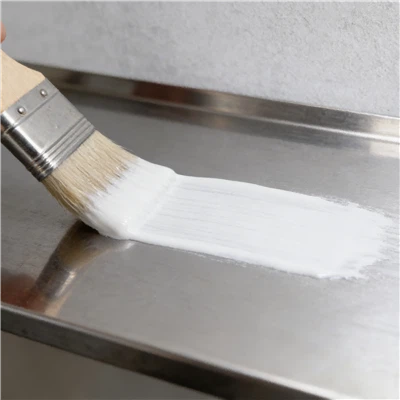
This coating bonds directly to the steel like glue with zero air gaps, so water cannot get underneath to cause rust or corrosion.
Insulates Valves And Bends Without Custom Fabrication
If a spray gun can reach the part, you can insulate it instantly, which completely cuts out the high labor cost of custom-cutting metal jackets.
Cuts Down Shipping And Storage Costs
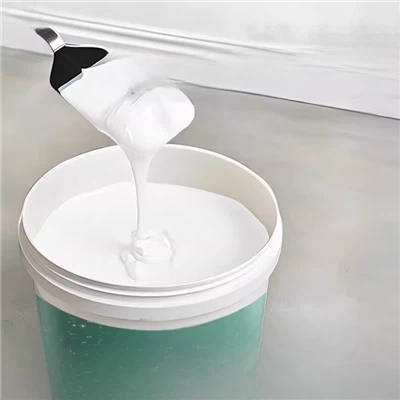
Because it ships as a liquid in standard pails instead of bulky tubes, you get far more insulation value into a single shipping container to save on freight.
Meets Workforce Safety Compliance
A few millimeters of this coating drops scorching pipe surfaces down below $60^\circ\text{C}$, protecting your maintenance crews from accidental burns without needing bulky metal cages.

Step 1: Substrate Preparation
Ensure the pipe surface is dry and free of mill scale, loose rust, oil, or salt. For carbon steel or lines exposed to heavy moisture, apply your specified industrial anti-corrosion primer first and allow it to fully cure.
Step 2: Equipment Setup
Use a heavy-duty industrial airless sprayer. Remove the fine filters from both the pump manifold and the gun to prevent the aerogel particles from clogging the lines. Equip the gun with a large-orifice tip (typically 0.025" to 0.029") for consistent flow.
Step 3: Layer Application
Stir the coating slowly before use to ensure a uniform consistency. Apply the coating in steady passes, aiming for a wet thickness of around 1mm per layer. Let each layer dry for 4 to 6 hours before applying the next coat, repeating until you hit the required dry film thickness (DFT).
Step 4: Weatherproofing Topcoat
For outdoor pipelines, overhead pipe racks, or lines exposed to chemical washdowns, apply a durable, UV-resistant polyurethane or epoxy topcoat over the cured aerogel layer to seal it from the environment long-term.
Capacity that matches your project scale: We handle everything from processing the raw aerogel to blending the final liquid coating, meaning we easily handle high-volume container orders without delays.
Consistent batch viscosity: We test every single production lot so the thickness, weight, and insulation values are identical from the first bucket to the last.
Realistic material estimates: We give you upfront coverage numbers that factor in pipe diameters, geometry, and real-world wind overspray so you don't run out of material mid-project.
Clear customs and shipping paperwork: We provide full SDS, COA, and non-hazardous transport certificates with every shipment to ensure your containers clear port customs without unexpected delays.

FAQ
1.How many millimeters do we need to apply to replace standard 50mm fiberglass insulation?
Aerogel blocks heat much better than fiberglass, so you don't need a 1:1 thickness. For a pipe running at $150^\circ\text{C}$, about 4mm to 6mm of dry aerogel coating usually achieves the same safe-to-touch surface results as a much thicker traditional wrap.
2.Can this coating handle pipe vibration and thermal expansion?
Yes. Rigid insulation wraps can crack or slide out of place when steam lines vibrate or expand. This coating cures into a slightly flexible, rubbery matrix that expands, contracts, and moves with the steel without cracking or losing its adhesion.
3.What is the shelf life if our construction project gets delayed?
Unopened buckets last 6 to 12 months when stored between $5^\circ\text{C}$ and $35^\circ\text{C}$. The most important rule for your warehouse team is to keep the material out of freezing temperatures, as freezing breaks the liquid emulsion permanently.
Hot Tags: aerogel insulation coating for pipelines, China aerogel insulation coating for pipelines manufacturers, suppliers, factory, Aerogel Car Coating, Aerogel Coating Price, Aerogel Coatings, Aerogel Powder Coating, Aerogel Thermal Coating, Aerogel Thermal Insulation Coating