

In the field of new materials, carbon fiber paper is gradually becoming an important material in the aerospace, electronics, energy and environmental protection industries due to its excellent mechanical properties, high temperature resistance and excellent conductivity. As a high-tech enterprise relying on key scientific research institutions in Zhejiang Province, Zhejiang Runhui New Materials Co., Ltd. is the first to use a variety of raw materials such as chemical synthetic fibers, inorganic fibers and mineral fibers to prepare special functional paper and aerogel insulation materials. The company not only has a key laboratory for special fiber paper-based functional materials technology research and a new materials research center, but also has obtained a number of invention patents, equipped with wet and dry manufacturing production lines, and has strong independent research and development and industrial production capabilities. This article will comprehensively analyze the definition, manufacturing principles, performance advantages, application scenarios and future development trends of carbon fiber paper to help industry insiders and customers gain a deep understanding of the core value of carbon fiber paper.
Contents
1. Basic Concepts of Carbon Fiber Paper
2. Manufacturing Process and Technical Principles of Carbon Fiber Paper
3. Performance Advantages of Carbon Fiber Paper
4. Application of Carbon Fiber Paper in Various Industries
5. Technical Advantages and Market Practices of Zhejiang Runhui New Materials Co., Ltd.
1. Basic Concepts of Carbon Fiber Paper
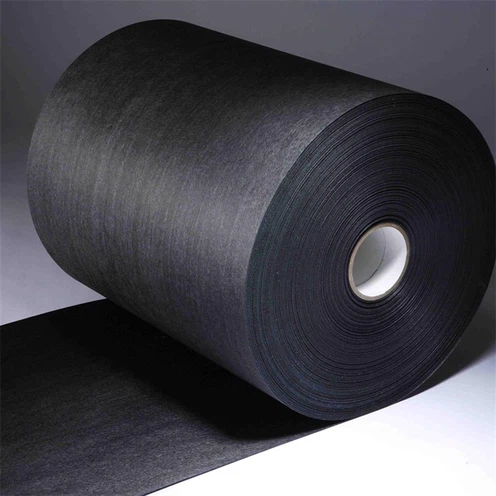
Carbon fiber paper is a composite material made of carbon fiber as the main reinforcing material through special fiber paper manufacturing technology. It combines the high strength, high rigidity and lightweight characteristics of carbon fiber with the easy processing and low cost advantages of paper materials. After special process treatment, carbon fiber paper not only has excellent mechanical properties, but also shows good high temperature resistance, corrosion resistance and electrical conductivity. Therefore, it is widely used in high-end equipment manufacturing, electronic components, aerospace, energy and environmental protection and other fields.


2. Manufacturing Process and Technical Principles of Carbon Fiber Paper
The manufacture of carbon fiber paper is a complex process involving multiple disciplines such as material science, textile technology and high temperature heat treatment, mainly including raw material selection, wet and dry production processes and post-processing processes.
2.1 Raw Material Selection and Ratio
The performance of carbon fiber paper depends largely on the quality of the selected raw materials. Commonly used raw materials include chemical synthetic fibers, inorganic fibers and mineral fibers.
Chemical synthetic fibers: prepared by polymerization reaction, with good uniformity and chemical stability;
Inorganic fibers: such as glass fibers, have high temperature tolerance and strong mechanical properties;
Mineral fibers: such as asbestos or other mineral fibers, have excellent thermal insulation and chemical corrosion resistance.
In terms of raw material ratio, the mixing ratio of different fibers directly affects the final performance of carbon fiber paper. The R&D team determined the optimal ratio through a large amount of experimental data and numerical simulation to ensure that the material reaches the ideal state in terms of strength, flexibility and high temperature resistance.
2.2 Wet and dry production process
The production process of carbon fiber paper is generally divided into two categories: wet and dry, each with its own advantages and disadvantages:
Wet production: The wet process suspends the fiber in water and then presses it into shape through a paper machine. Wet production has the advantages of uniform fiber distribution and controllable paper thickness, which is suitable for large-scale production. The key in the wet process is to control the uniformity of the slurry and the drying rate of the paper to ensure the mechanical properties and stability of the final product.
Dry production: Dry production mainly uses processes such as hot pressing, melting and compounding to directly shape the pretreated fibers. Dry production can save drying time and is suitable for producing high-performance, ultra-thin and high-density carbon fiber paper, but it has high requirements for equipment and process control.
The R&D team usually selects the appropriate production method according to the performance requirements of the final product, and achieves high efficiency and high consistency production through automated equipment and precision control.
2.3 Post-processing process and surface modification
After the basic molding is completed, the carbon fiber paper also needs to undergo post-processing to improve its performance. Common post-processing steps include:
Heat treatment: Improve the bonding force between fibers through high-temperature heat treatment, enhance the mechanical strength and high temperature resistance of the material.
Surface modification: Use spraying, electrophoresis, plating and other technologies to treat the paper surface to improve corrosion resistance and wear resistance, while giving the product better conductivity or thermal insulation.
Composite process: Some products may need to be composited with other functional layers, such as aerogel, thermal insulation film, etc., to achieve multi-functional integration and broaden the application field.
These post-processing processes not only optimize product performance, but also provide a guarantee for the reliability of carbon fiber paper in special applications.
3. Performance advantages of carbon fiber paper
After a series of process treatments, carbon fiber paper shows many excellent performance advantages, which is why it is favored in high-end application fields:
3.1 High strength and light weight
Carbon fiber paper has excellent mechanical properties, with both high strength and light weight. Compared with traditional metal materials, carbon fiber paper can significantly reduce weight while maintaining the same strength, making it widely used in aerospace, automobiles and high-performance equipment.
3.2 High temperature resistance and corrosion resistance
Through heat treatment and surface modification, carbon fiber paper can maintain stable performance in high temperature environments and has good corrosion resistance. Under extreme working conditions, such as high temperature and acid-base environments, carbon fiber paper can work stably for a long time, providing reliable protection for high-end equipment.
3.3 Excellent electrical and thermal conductivity
After special process treatment, some carbon fiber paper products have good electrical conductivity and thermal conductivity. This characteristic gives it a unique advantage in electronic equipment, energy transmission and thermal management systems. It can be used as a structural material and provide added value at the functional level.
3.4 Good processability and customizability
Carbon fiber paper has high processing flexibility during the production process and can be customized according to different application requirements. From paper thickness, density to surface treatment, it can be optimized and designed according to customer needs to meet the customization requirements of various high-end applications.
4. Application of carbon fiber paper in various fields
Due to its unique performance advantages, carbon fiber paper has a wide range of applications in many industries. The following are several typical application areas:
4.1 Aerospace and defense
In the aerospace field, carbon fiber paper is often used to manufacture lightweight, high-strength structural parts to reduce the weight of aircraft and improve fuel efficiency; at the same time, its high temperature and corrosion resistance enable it to maintain stable performance in high-temperature working environments.
4.2 Electronics and new energy
Electronic equipment has extremely high requirements for the thermal conductivity and electromagnetic shielding of materials. Carbon fiber paper plays an important role in this field as a thermal conductive material and structural support material. In new energy equipment, carbon fiber paper is also commonly used in high-efficiency battery separators, conductive composite materials and other applications to improve overall energy efficiency.
4.3 Environmental protection and high-temperature insulation
In environmental protection and high-temperature insulation applications, carbon fiber paper is widely used in building insulation, industrial thermal management and fireproof materials due to its excellent thermal insulation performance and high temperature resistance. Its lightweight and high-efficiency characteristics help reduce energy consumption and improve system safety.
4.4 Automobiles and high-end equipment
In automobile manufacturing and high-end equipment, carbon fiber paper as a structural material can significantly reduce weight and improve vehicle performance. At the same time, its excellent wear resistance and corrosion resistance ensure the reliability of the product in long-term use.
5. Technical advantages and practices of Zhejiang Runhui New Materials Co., Ltd.
As a high-tech enterprise relying on key scientific research institutions in Zhejiang Province, Zhejiang Runhui New Materials Co., Ltd. has always been at the forefront of special paper materials and aerogel insulation materials technology. The company has a number of core advantages in the research and development and production of carbon fiber paper:

5.1 Company Profile and Location Advantages
Zhejiang Runhui New Materials Co., Ltd. is located in Zhejiang Province. Relying on the technical support of key scientific research institutions, it is committed to the research and development, manufacturing and sales of special paper materials and aerogel insulation materials. Relying on the two major production processes of wet and dry methods, the company has a key laboratory for the technical research of special fiber paper-based functional materials and a new material research center to provide high-quality products and professional services to global customers.
5.2 R&D and Production Capabilities
The company is the first to use a variety of materials such as chemical synthetic fibers, inorganic fibers and mineral fibers in the field of carbon fiber paper. Through optimized ratios and advanced processes, the products have achieved high strength, high temperature resistance, corrosion resistance and lightweight. Relying on multiple wet and dry production lines and a complete quality inspection system, the company can efficiently complete the entire process from research and development design to large-scale production, and maintain high consistency and high reliability.

5.3 Core Products and Application Cases
Zhejiang Runhui's new material products cover aerogel insulation materials, battery separators, special filter materials, purification wiping materials, and high and low temperature insulation materials series. Among them, carbon fiber paper, as a kind of special functional paper, is widely used in aerospace, electronics, energy and environmental protection due to its excellent performance. By continuously optimizing product design and process flow, the company has been successfully verified in many high-end projects and won high recognition from customers.
Conclusion
As an emerging special paper material, carbon fiber paper has shown great market potential in high-end application fields such as aerospace, electronics, energy, and environmental protection due to its excellent properties such as high strength, high temperature resistance, corrosion resistance and lightweight. Its preparation process involves a variety of raw materials such as chemical synthetic fibers, inorganic fibers and mineral fibers. Performance optimization is achieved through wet and dry processes and post-processing technologies to ensure that the product can still maintain excellent performance under harsh environments.
Zhejiang Runhui New Materials Co., Ltd., relying on the technical advantages of key scientific research institutions in Zhejiang Province, has established a key laboratory for special fiber paper-based functional materials technology research and a new materials research center, and is the first in China to use a variety of advanced processes to prepare carbon fiber paper. The company has wet and dry production lines, multiple invention patents and a complete quality inspection system to ensure that each batch of products meets high international standards. Our products are not only used in aerogel insulation, battery separators, special filtration and purification wiping, but also in a leading position in the industry in many key technologies such as high and low temperature insulation.