

Table of contents
2. Principles of conductive performance: The secret of conductivity from raw materials to structure
3. Key factors affecting conductive performance
4. Application practice of conductive performance in different fields
5. Performance comparison with other conductive materials
6. Technical challenges and innovation directions
7. Conclusion: Conductive performance drives the future development of Paper Carbon Fiber
1. Introduction: The rise of Paper Carbon Fiber and the significance of conductive performance research
At a time when the field of new materials is booming, Paper Carbon Fiber is gradually emerging with its unique performance advantages. This new material that combines carbon fiber with paper-based materials not only has the characteristics of light weight and high strength, but its conductive properties have also attracted widespread attention from scientific research and industry. In-depth exploration of the conductive properties of Paper Carbon Fiber has important theoretical and practical significance for expanding its application in electronics, energy and other fields and promoting technological innovation in related industries.
2. Principles of conductive performance: The secret of conductivity from raw materials to structure
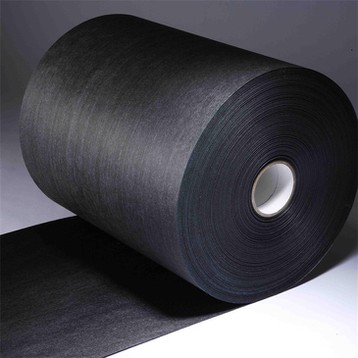
The conductive properties of Paper Carbon Fiber are rooted in its raw materials and microstructure. The core raw material carbon fiber itself has good conductivity. Carbon fiber is composed of carbon atoms and forms a highly oriented graphite microcrystalline structure during high-temperature carbonization. This structure provides a channel for electron conduction. When the carbon fibers are evenly dispersed in the paper-based material, they overlap with each other to form a continuous conductive network. Electrons can move freely in this network, making Paper Carbon Fiber conductive. In addition, although cellulose and other components in paper-based materials are not conductive in themselves, under specific processes, their composite structure with carbon fibers can optimize the electron transmission path and further improve the conductive properties of the material.
3. Key factors affecting conductive performance
1. Carbon fiber content and distribution
The content of carbon fiber in Paper Carbon Fiber directly affects the conductive properties. Generally speaking, as the carbon fiber content increases, the continuity of the conductive network increases, and the conductivity of the material also increases. However, when the carbon fiber content exceeds a certain proportion, agglomeration may occur, which hinders the conduction of electrons. At the same time, the uniform distribution of carbon fiber in the paper base is crucial. Uneven distribution will cause breakpoints in the conductive network and reduce the overall conductive properties.
2. Type and quality of raw materials
Different types of carbon fiber, such as PAN-based carbon fiber and asphalt-based carbon fiber, have different conductive properties. PAN-based carbon fiber usually has higher conductivity due to its high degree of graphitization. In addition, the type and quality of pulp will also indirectly affect the conductive properties. Pulp with high purity and good fiber morphology can better combine with carbon fiber and help form a stable conductive network.
3. Preparation process
The preparation process has a significant impact on the conductive properties of Conductive Carbon Paper. Different processes such as wet molding, dry molding and hot pressing will result in different fiber arrangements and pore structures inside the material.
4. Application practice of conductive performance in different fields
1. Electronic equipment field
In electronic equipment, Paper Carbon Fiber can be used to manufacture flexible circuit boards, electromagnetic shielding materials, etc. Its lightweight, flexible and conductive properties enable electronic devices to be miniaturized and flexible while effectively shielding electromagnetic interference and ensuring the stable operation of circuits. For example, the electromagnetic shielding film made of Paper Carbon Fiber is applied to mobile phones, tablets and other devices to reduce signal interference and improve device performance.
2. Energy storage and conversion field
In supercapacitors and lithium-ion batteries, Paper Carbon Fiber can be used as an electrode material. Its good conductivity helps to improve the charge and discharge efficiency of the electrode, and its high specific surface area is conducive to the load of active substances and improves the energy density of the battery. Studies have shown that the charge and discharge speed of supercapacitors using Paper Carbon Fiber as electrodes is significantly improved compared to traditional electrode materials.
3. Sensor field
Various types of sensors can be prepared using Paper Carbon Fiber's conductive properties and sensitivity to environmental changes. When external environmental factors such as temperature, humidity, and pressure change, the resistance of the material will change accordingly. By detecting the resistance change, environmental parameters can be monitored. In the fields of smart buildings and industrial detection, sensors based on Paper Carbon Fiber are playing an important role.
5. Performance comparison with other conductive materials
Compared with traditional conductive materials such as copper and aluminum, although Paper Carbon Fiber has relatively low conductivity, it has obvious advantages in light weight, flexibility and processability, and is suitable for scenarios with special requirements for weight and shape. Compared with new conductive materials such as graphene and carbon nanotubes, Paper Carbon Fiber has greater potential in large-scale production and cost control. At the same time, Paper Carbon Fiber can further improve its conductive properties by optimizing the formula and process, narrowing the gap with other high-performance conductive materials.
6. Technical challenges and innovation directions
At present, there are still many challenges in improving the conductive properties of Carbon Fiber Contact Paper. For example, how to further improve the content and dispersion of carbon fiber while ensuring other properties of the material; how to reduce the cost of raw materials and achieve large-scale industrial production. Future innovation directions include developing new carbon fiber and pulp raw materials, improving preparation processes to optimize material structure, and exploring composite technologies with other conductive materials, and promoting breakthroughs in the conductive properties of Paper Carbon Fiber through multidisciplinary cross-integration.
7. Conclusion: Conductive performance drives the future development of Paper Carbon Fiber
The conductive properties of Paper Carbon Fiber give it broad application prospects and development potential. With the continuous deepening of research on its conductive properties and the continuous advancement of technological innovation, this new material is expected to achieve application breakthroughs in more fields, inject new vitality into the development of industries such as electronics, energy, and sensors, and become an important force in promoting the progress of the new materials industry.