


Zhejiang Runhui New Materials Co., Ltd.
Zhejiang Runhui New Materials Co., Ltd. (operating under the brand Runfew) is a leading innovator in advanced insulation and functional materials, with a focus on aerogel-based solutions. Based in Zhejiang Province, China, the company leverages partnerships with key scientific research institutions to drive innovation in special fiber paper and aerogel insulation technologies. Its product portfolio has aerogel blankets, panels, powders, and coatings, all engineered to meet the demanding requirements of marine engineering, construction, and electronics.
Runfew's aerogel coating stands out as a specialized offering designed for extreme environments. Aerogels-known for their ultra-low thermal conductivity and high porosity-form the core of this coating, which is enhanced with additives to deliver multifunctional performance beyond insulation. The company's state-of-the-art production facilities, combined with a dedicated research team and key laboratory for fiber-based materials, ensure that its aerogel coatings undergo rigorous testing to meet industrial standards for durability and reliability.
With a commitment to sustainability, Runfew's aerogel coatings are formulated to minimize environmental impact, using eco-friendly binders and reducing reliance on hazardous chemicals often found in traditional anti-corrosion coatings. This alignment with green manufacturing practices has positioned the product as a preferred choice for marine engineering projects seeking performance and environmental responsibility.
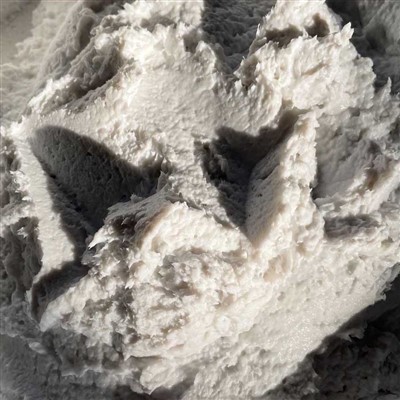

Composition And Core Properties
Aerogel coatings developed by Runfew are composite materials that integrate silica aerogel particles with polymer binders, corrosion inhibitors, and reinforcing agents. This unique composition combines the structural advantages of aerogel with the flexibility and adhesion of polymers, creating a coating that adheres tightly to metal surfaces while forming a protective barrier.
Key properties of Runfew's aerogel coating:
Ultra-low permeability: The nanoporous structure of aerogels creates a tortuous path for moisture, salt ions, and gases, slowing their penetration to underlying metal surfaces.
Thermal stability: The coating maintains its integrity across a wide temperature range, from freezing conditions to the high heat generated by marine engines or industrial equipment.
Flexibility: Unlike rigid anti-corrosion materials, the coating can expand and contract with metal substrates exposed to temperature fluctuations, preventing cracking or peeling.
Chemical resistance: Formulated to withstand exposure to saltwater, industrial chemicals, and pollutants commonly encountered in marine environments.
These properties collectively contribute to the coating's ability to resist corrosion, making it suitable for hulls, pipelines, offshore platforms, and underwater structures.
Anti-Corrosion Mechanisms In Marine Environments
Marine engineering faces unique corrosion challenges, driven by constant exposure to saltwater, humidity, and electrochemical reactions between metal surfaces and seawater. Runfew's aerogel coating addresses these challenges through multiple protective mechanisms:
Barrier Protection
The primary function of the aerogel coating is to act as a physical barrier, isolating metal surfaces from corrosive agents. The aerogel's nanoporous structure traps air, reducing the diffusion of water, oxygen, and chloride ions-key contributors to rust and pitting corrosion. This barrier effect is enhanced by the coating's dense, uniform application, which eliminates pinholes or gaps that could allow moisture ingress.
In contrast to traditional coatings, which may degrade over time, Runfew's aerogel coating retains its barrier properties longer, thanks to the stability of aerogel particles and UV-resistant binders. This extended longevity reduces the need for frequent reapplication, a critical advantage for marine structures where maintenance is costly and logistically challenging.
Inhibitive Protection
Beyond physical barrier properties, the coating incorporates corrosion inhibitors that actively slow oxidation reactions. These inhibitors-often organic compounds or metal oxides-are released gradually as the coating interacts with moisture, forming a protective film on the metal surface. This film disrupts the electrochemical process that causes corrosion, even in areas where the coating may be slightly damaged.
In regions where saltwater seeps through minor cracks, the inhibitors react with metal ions to form a passivating layer, preventing further degradation. This dual-action (barrier + inhibition) approach provides redundant protection, ensuring corrosion resistance even under imperfect conditions.
Adhesion And Flexibility
Corrosion often accelerates at points where coatings detach from metal surfaces, creating pockets for moisture accumulation. Runfew's aerogel coating is engineered for strong adhesion to steel, aluminum, and other marine-grade metals, using binders that form chemical bonds with the substrate. This adhesion remains robust even when exposed to vibration, wave impacts, or thermal cycling-common in marine environments.
The coating's flexibility further prevents delamination. As metal structures expand or contract with temperature changes (between day and night in offshore settings), the coating stretches without cracking, maintaining a continuous protective layer. This flexibility is particularly valuable for dynamic components.
Performance In Extreme Marine Conditions
Runfew's aerogel coating is designed to withstand the harshest marine environments:
Saltwater Immersion
Prolonged contact with saltwater exposes metals to high concentrations of chloride ions, which accelerate pitting corrosion. Testing shows that the coating resists degradation in saltwater immersion, with minimal weight loss or blistering even after extended periods. This performance is attributed to the aerogel's ability to repel water and the inhibitors' role in neutralizing chloride ions.
Humidity And Condensation
Offshore platforms and ship interiors often experience high humidity, leading to condensation on metal surfaces. The coating's hydrophobic properties prevent water from pooling, while its breathability allows trapped moisture to evaporate, reducing the risk of under-coating corrosion. This balance of water resistance and breathability is particularly beneficial in enclosed spaces, where temperature fluctuations can cause frequent condensation.
UV Radiation And Weathering
Exposure to sunlight can cause traditional coatings to chalk, crack, or lose adhesion. Runfew's aerogel coating has UV stabilizers that protect against photo-oxidation, ensuring the coating retains its integrity and appearance in outdoor marine settings. This stability is critical for above-deck components of offshore platforms and ship superstructures, which are constantly exposed to direct sunlight.
Abrasion And Impact
Marine structures are prone to abrasion from debris, ice, or docking impacts. The coating's reinforced formulation-incorporating fibers or nanoparticles-enhances its resistance to wear, maintaining protective properties even after minor physical damage. In Arctic marine operations, where ice floes may scrape against hulls, the coating's toughness helps preserve the underlying barrier against corrosion.
Extreme Temperature Fluctuations
Marine environments often experience rapid temperature changes, from freezing nights to hot days, which can cause metal substrates to expand and contract. Runfew's aerogel coating withstands these fluctuations without compromising its structure, avoiding the cracking or peeling that can expose metal to corrosion. This thermal resilience is especially valuable for polar or tropical marine applications, where temperature swings are most dramatic.
Biofouling Resistance
Marine structures face challenges from biofouling-the accumulation of marine organisms (barnacles, algae, and mollusks). Runfew's aerogel coating incorporates additives that deter biofouling, reducing the need for frequent cleaning or anti-fouling treatments. The smooth surface of the coating makes it difficult for organisms to attach, while specialized compounds create an environment inhospitable to their growth. This property is particularly beneficial for ship hulls, where biofouling increases drag and fuel consumption.
Applications In Marine Engineering
Runfew's aerogel coating finds diverse applications in marine engineering, where anti-corrosion performance is critical to operational safety and longevity:
Ship Hulls: Applied to hulls to prevent corrosion from saltwater, reducing drag caused by rust buildup and extending the intervals between dry-dock maintenance. The coating's smooth finish minimizes the attachment of marine organisms, reducing the need for anti-fouling treatments.
Offshore Platforms: Used on structural steel, pipelines, and equipment to resist corrosion in splash zones-areas alternately exposed to saltwater and air, where corrosion is most aggressive. The coating's flexibility helps it withstand the constant movement of platform components.
Underwater Pipelines: Coated on subsea pipelines to protect against corrosion and reduce heat loss, maintaining the efficiency of oil, gas, or water transport. In deep-sea applications, the coating's resistance to high hydrostatic pressure ensures it remains intact at great depths.
Marine Machinery: Applied to engines, pumps, and metal components in engine rooms, where humidity and chemical exposure accelerate wear. The coating's thermal insulation properties help keep machinery cool, reducing overheating risks.
Coastal Infrastructure: Used on piers, docks, and breakwaters to protect against saltwater corrosion and wave damage, extending the lifespan of these critical structures.
In each application, the coating's lightweight nature is an added benefit, reducing the overall weight of marine structures compared to heavier anti-corrosion materials. This weight reduction can improve fuel efficiency for ships and reduce structural stress on offshore platforms.
Environmental And Economic Advantages
Beyond its anti-corrosion performance, Runfew's aerogel coating offers compelling environmental and economic benefits for marine engineering:
Reduced Maintenance Costs: The coating's long service life-often exceeding that of traditional coatings-reduces the frequency of reapplication, lowering labor and material costs associated with maintenance. For offshore platforms, this translates to fewer shutdowns for coating repairs, maximizing operational uptime.
Energy Efficiency: While primarily valued for anti-corrosion, the coating's thermal insulation properties help reduce heat loss from pipelines or machinery, improving energy efficiency in marine operations. Insulated subsea pipelines require less energy to maintain fluid temperatures, lowering operational costs.
Low Environmental Impact: Free from heavy metals and volatile organic compounds (VOCs), the coating aligns with global regulations restricting hazardous materials, reducing environmental contamination during application and disposal. This is particularly important in sensitive marine ecosystems, where chemical runoff can harm aquatic life.
Sustainability: The use of silica aerogel-derived from abundant raw materials-supports sustainable manufacturing practices, while the coating's longevity reduces waste from frequent replacements. The coating's production process consumes less energy compared to the manufacturing of traditional heavy coatings, further reducing its carbon footprint.
Regulatory Compliance: The coating meets international standards for marine environmental protection. This compliance simplifies approval processes for marine projects, reducing delays and ensuring adherence to global best practices.