

Zhejiang Runhui New Materials Co., Ltd.
Zhejiang Runhui New Materials Co., Ltd., based in Longyou Economic Zone, Zhejiang Province, has solidified its position as a pioneer in advanced building materials, with a singular focus on resolving one of construction's most persistent conflicts: balancing thermal insulation and fire safety. The company's expertise spans the entire lifecycle of aerogel-based products, from raw material development to end-use application, supported by a robust ecosystem of research partnerships with key scientific institutions in Zhejiang, specialized manufacturing facilities equipped with wet and dry production lines, and rigorous testing protocols overseen by its key laboratory for fiber-based functional materials.
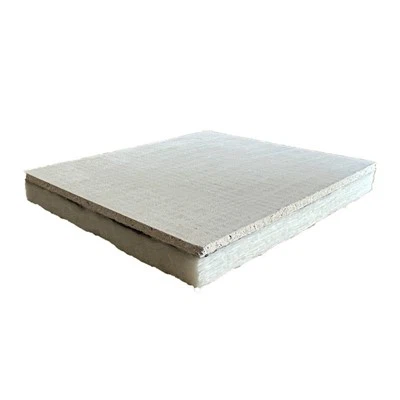
At the heart of Runhui's innovation is the Aerogel Panel-a material born from years of refining nanoscale engineering and composite design. Unlike traditional insulation solutions that force trade-offs between efficiency and safety, this panel integrates the thermal resistance of aerogel with the structural and fire-resistant properties of inorganic fibers, creating a product that excels in domains. Runhui's commitment to this balance is evident in its state-of-the-art production lines, which combine wet-laid fiber processing (to ensure uniform fiber distribution) with precision aerogel deposition (to maintain nanoscale porosity), ensuring consistency across every panel. Backed by a team of materials scientists specializing in thermal and fire performance, the company has positioned its Aerogel Panel as a cornerstone of modern, code-compliant construction.
Why insulation and fire protection clash
In building design, two critical imperatives often stand at odds, rooted in the fundamental properties of materials:
Thermal insulation relies on trapping air or inert gases to slow heat transfer. Effective insulators minimize thermal conductivity, typically through porous or fibrous structures that limit molecular movement. These structures-especially when organic-based-are often susceptible to ignition, as their porous nature can act as fuel reservoirs.
Fire protection demands materials that resist combustion, maintain structural integrity under high heat, and limit smoke and toxic emissions.
This tension has real-world consequences that extend beyond safety and energy efficiency:
Architects and engineers frequently report redesigning layouts to accommodate thicker, fire-resistant insulation, reducing usable floor space by 5–10% in commercial buildings-a significant loss in high-value real estate.
Building owners face dilemmas during retrofits: upgrading insulation to meet energy codes may require using flammable materials that violate fire regulations, or adhering to fire codes may mean sacrificing energy efficiency and incurring higher utility costs.
Traditional solutions exacerbate this conflict in ways that ripple through the construction lifecycle:
Polyurethane foam degrades when exposed to UV light, requiring protective cladding that adds cost and complexity. Its flammability means it must be paired with fire barriers, creating layered systems prone to gaps where fire can spread.
Mineral wool absorbs moisture over time, losing up to 30% of its insulation efficiency in humid climates. This degradation forces premature replacement, increasing waste and lifecycle costs.
XPS foam releases hydrochloric acid when burned, corroding building systems and endangering firefighters-a factor that has led to its ban in several European countries.
This clash has grown more urgent in the wake of high-profile disasters, which prompted stricter global codes (the UK's Building Safety Act 2022) mandating non-combustible materials in high-rises. Simultaneously, rising energy costs and climate goals drive demand for better insulation, making a balanced solution critical.
Bridging insulation and fire protection
Core properties of Runhui's Aerogel Panel
Runhui's Aerogel Panel is engineered to resolve this conflict through a synergistic combination of materials and design, each component addressing a specific challenge:
Silica aerogel matrix: At its core is a nanoporous silica structure, with 90%+ of its volume occupied by air trapped in pores smaller than 100 nanometers. This structure limits heat transfer via conduction (air molecules cannot move freely) and convection (pores are too small for bulk air flow), resulting in ultra-low thermal conductivity.
Inorganic fiber reinforcement: Silica aerogel, while thermally efficient, is brittle and prone to cracking under mechanical stress. Runhui embeds it in a matrix of glass or ceramic fibers, which add tensile strength and prevent fragmentation during installation or thermal expansion.
Protective coating: A thin, silane-based hydrophobic layer is applied to the panel's surface, repelling moisture that could degrade insulation performance or promote mold growth-common issues with mineral wool, which lacks protection.
These properties collectively deliver a material that:
Meets the highest fire safety standards (Class A1 under EN 13501-1), remaining stable at temperatures up to 1,000°C without igniting or releasing toxic fumes.
Provides thermal insulation comparable to traditional materials at half the thickness, preserving interior space.
Resists degradation from moisture, UV exposure, and thermal cycling, ensuring consistent performance over decades.


How Aerogel Panel resolves the contradiction
Nanoscale insulation
Aerogel's unique structure redefines thermal resistance by leveraging the physics of molecular movement. Its pores-smaller than the mean free path of air molecules (≈68 nm at atmospheric pressure)-trap air in isolated pockets, eliminating convection entirely. Conduction is minimized because silica's inherent thermal conductivity is low, and the sparse network of silica particles (only 3–5% of the material's volume) provides few pathways for heat transfer.
Runhui's manufacturing process preserves this structure through precision engineering:
Sol-gel synthesis: Silica precursors are mixed in a controlled environment to form a gel, ensuring uniform pore size distribution.
Supercritical drying: The gel is dried using supercritical CO₂, which avoids the capillary pressure that would collapse pores during conventional drying, preserving the nanoscale structure.
Fiber integration: Fibers are added during the final stages, ensuring they reinforce the aerogel without disrupting its porosity.
The result is a material that insulates 2–3 times better than mineral wool at half the thickness, reducing the need for bulky installations that complicate fire barrier design and add structural load.
Inherently stable under heat
Silica (SiO₂), the primary component of aerogel, has a melting point of ~1,713°C-far above the temperatures of typical building fires (800–1,200°C). Unlike organic materials that decompose into flammable gases when heated, silica remains chemically stable, releasing no toxic byproducts.
Runhui enhances this stability with fiber reinforcement:
Glass fibers (melting point ~1,500°C) add flexibility, preventing the panel from shattering during rapid temperature changes.
Ceramic fibers (melting point ~1,700°C) are used in high-risk applications to provide extra heat resistance.
Testing under ISO 834 (standard fire curve) confirms the panel maintains its shape and insulation properties for 120+ minutes, exceeding the 60-minute requirement for escape routes in high-rise buildings. This structural integrity ensures the panel acts as a continuous barrier, slowing fire spread through walls or ceilings.
Expanded applications in building design
Runhui's Aerogel Panel addresses insulation-fire conflicts in specialized scenarios where traditional materials fall short:
Historic building preservation: Retrofitting historic structures requires insulation that avoids altering architectural features. The panel's thin profile (3–5 cm) installs discreetly behind ornate facades, improving energy efficiency without damaging original materials. A 19th-century museum in France used the panels to meet modern energy codes while preserving its historic stone exterior, passing strict heritage preservation audits.
High-rise curtain walls: Curtain walls in skyscrapers require insulation that doesn't add weight or compromise fire safety. Aerogel panels integrate into aluminum framing systems, reducing thermal bridging (heat loss through metal) by 60% compared to mineral wool, while meeting fire ratings for vertical spread.
Industrial facilities: Factories and power plants need insulation that resists high temperatures and fire. Runhui's ceramic-reinforced panels insulate boiler rooms and chemical processing areas, withstanding intermittent heat up to 800°C without degrading.
Residential attics: Homeowners often struggle to balance attic insulation (to reduce heating costs) and fire safety (to protect against electrical fires). The panel's lightweight design (5–8 kg/m²) avoids compressing ceiling joists, while its fire resistance provides peace of mind.
Lifecycle and environmental impact
Beyond cost savings, the Aerogel Panel offers environmental benefits that align with green building standards:
Reduced embodied carbon: While aerogel production requires energy, the panel's longevity (50+ years) and reduced material use lower lifecycle carbon emissions by 40–50% compared to mineral wool, which requires frequent replacement.
Recyclability: Runhui's ongoing research into circular manufacturing allows end-of-life panels to be crushed and reprocessed into silica powder, reused in new aerogel or as a filler in concrete, reducing waste.
Energy efficiency: Buildings using the panels require smaller HVAC systems, cutting upfront energy infrastructure costs and lowering operational carbon footprints. A residential complex in Singapore reported a 25% reduction in peak cooling demand after installing the panels.
Global regulatory alignment
The panel's compliance with diverse standards eases adoption across regions:
EU: Meets EN 13501-1 (A1 fire rating) and EN ISO 10456 (thermal performance), qualifying for LEED and BREEAM credits.
U.S.: Complies with NFPA 285 (fire testing for exterior walls) and ASHRAE 90.1 (energy standards), approved for use in high-rises in California and New York.
China: Exceeds GB 8624-2012 (A2-s1, d0 fire rating) and GB/T 10294 (thermal insulation standards), used in Beijing's "Green Building Label" projects.
Runhui's ongoing innovation
The company continues to refine its Aerogel Panel through targeted R&D:
Thin-film variants: Developing 1–2 cm panels for space-constrained applications.
Fire-retardant coatings: Enhancing the hydrophobic layer with intumescent additives that expand when heated, creating an extra fire barrier in high-risk areas.
Digital integration: Partnering with building management system providers to embed RFID tags in panels, enabling tracking of installation dates, performance data, and recycling eligibility.
A paradigm shift in building materials
Zhejiang Runhui New Materials Co., Ltd.'s Aerogel Panel resolves the insulation-fire contradiction not through compromise, but through innovation. By harnessing the unique properties of nanoscale aerogel and reinforcing it with fire-resistant fibers, the panel delivers exceptional thermal efficiency and uncompromising safety.
As buildings face increasingly stringent demands for energy efficiency and resilience, this technology sets a new standard: materials can protect occupants from fire and reduce energy use, without forcing trade-offs. For architects, engineers, and builders, Runhui's Aerogel Panel is more than a product-it's a tool to reimagine what's possible in sustainable, safe construction.