

Aerogel insulation blankets are increasingly used in LNG facilities, petrochemical plants, power generation systems, industrial pipelines, and battery energy storage projects. Their low thermal conductivity and flexible structure make them suitable for equipment where conventional insulation may require more installation space.
However, choosing an aerogel blanket manufacturer involves more than comparing the lowest thermal conductivity value or quotation. Buyers also need to evaluate reinforcement materials, operating temperature, hydrophobic performance, dimensional tolerances, production consistency, and technical documentation.
China has several manufacturers supplying silica aerogel blankets and related insulation materials. This article introduces five companies and examines the technical and procurement factors that industrial buyers should consider before placing an order.
Top 5 Aerogel Blanket Manufacturers in China
|
Manufacturer |
Main Products |
Application Focus |
|---|---|---|
|
Runfew |
Fiberglass Aerogel Blanket, Ceramic Fiber Aerogel Blanket, Aerogel Panel |
Industrial and customized thermal insulation |
|
IBIH Advanced Materials |
Silica Aerogel Blanket |
Industrial thermal insulation |
|
Guangdong Alison Technology |
Aerogel Blanket, Panel, Powder |
Industrial pipelines and equipment |
|
Guangdong Aerogel Technology |
Aerogel Insulation Materials |
High-temperature insulation |
|
Nano Tech Co., Ltd. |
Aerogel Blanket and Thermal Insulation Materials |
Industrial and building insulation |
Runfew New Material
Runfew New Material, operated by Zhejiang Runhui New Materials Co., Ltd., focuses on the research, development, and production of special functional paper and aerogel insulation materials. Its product portfolio includes aerogel blankets, panels, fabrics, powders, coatings, and specially shaped insulation components.
For industrial customers, Runfew offers different aerogel blanket structures to accommodate varying temperature conditions and installation requirements.
Runfew's aerogel blanket products include:
- Fiberglass Aerogel Blanket: Silica aerogel combined with fiberglass reinforcement for industrial thermal insulation.
- Ceramic Fiber Aerogel Blanket: A reinforced structure designed for applications requiring higher temperature resistance.
- Pre-Oxidized PAN Fiber Aerogel Felt: An alternative fiber-reinforced material for specialized insulation requirements.
These products are available in different material configurations. Buyers can evaluate the reinforcement structure according to operating temperature, flexibility, equipment geometry, and installation conditions.
Runfew lists thermal conductivity as low as 0.015 W/(m·K) for its aerogel insulation products. When evaluating this figure, procurement teams should also check the test temperature, test method, product thickness, and density.
Runfew develops multiple aerogel material formats rather than focusing exclusively on standard insulation blankets. Its manufacturing and product development capabilities cover wet and dry production processes, with additional research into functional fiber-based materials.
For customized orders, buyers can discuss:
- Blanket thickness and roll dimensions
- Fiberglass or ceramic fiber reinforcement
- Surface facing and laminated structures
- Hydrophobic treatment requirements
- Special-shaped insulation components
- OEM packaging and product labeling
These options are relevant to distributors, insulation contractors, and industrial engineering companies that need materials matched to specific equipment dimensions.
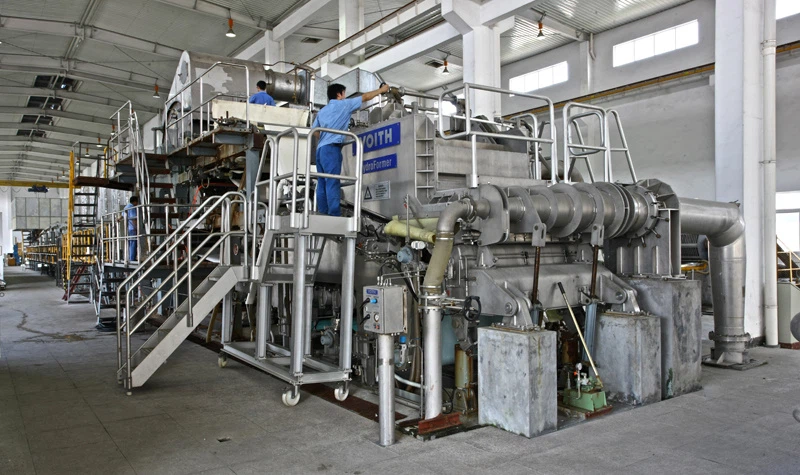
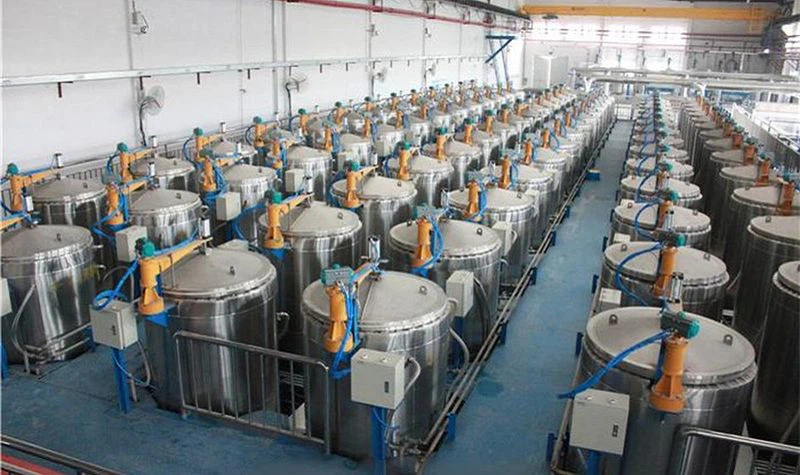
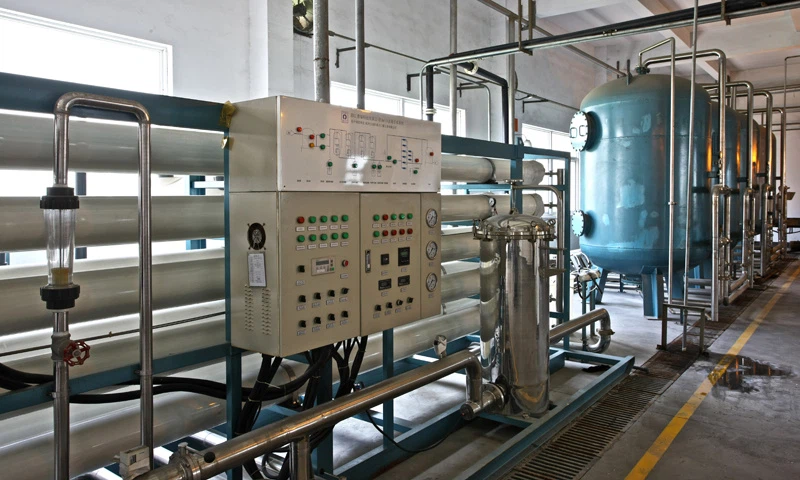
Runfew aerogel blankets are designed for applications involving industrial pipelines, petrochemical equipment, LNG systems, heat-transfer equipment, and energy facilities.
For steam pipelines, the selected blanket must withstand the actual operating temperature and thermal cycling conditions. For cryogenic pipelines, moisture protection and vapor-barrier installation are equally important. Equipment with elbows, valves, and irregular surfaces may also require customized cutting dimensions to reduce installation gaps.
Best suited for: Industrial customers seeking fiberglass or ceramic fiber aerogel blankets, related aerogel materials, and customized insulation configurations.
IBIH Advanced Materials
IBIH Advanced Materials focuses on silica aerogel insulation products for industrial applications. Its aerogel blanket products are associated with pipelines, petrochemical facilities, power systems, and thermal equipment insulation.
Buyers evaluating IBIH can compare its blanket specifications with their project requirements, particularly thickness, density, temperature range, and thermal conductivity.
Guangdong Alison Technology
Guangdong Alison Technology develops aerogel insulation materials, including flexible blankets, panels, and powders. Its products cover industrial insulation, construction, and new-energy applications. The company reports an annual aerogel material production capacity of approximately 70,000 m³.
Guangdong Aerogel Technology
Guangdong Aerogel Technology is included in the Chinese aerogel supplier market for its focus on high-temperature insulation materials. Buyers considering this supplier should pay particular attention to continuous service temperature, thermal shrinkage, reinforcement structure, and fire-test documentation.
Nano Tech Co., Ltd.
Nano Tech Co., Ltd. supplies aerogel-related thermal insulation materials, including aerogel blankets and other insulation formats. Its broader product range may be relevant to buyers sourcing multiple insulation materials. Specific blanket specifications, production capacity, and customization options should be confirmed before ordering.
Aerogel Blanket vs. Traditional Insulation Materials
Industrial buyers often compare aerogel blankets with rock wool, glass wool, and ceramic fiber products. The right comparison should consider the complete insulation system rather than thermal conductivity alone.
|
Comparison Factor |
Aerogel Blanket |
Rock Wool |
Glass Wool |
Ceramic Fiber Blanket |
|---|---|---|---|---|
|
Thermal Conductivity |
Generally low |
Depends on density and temperature |
Depends on density and temperature |
Varies by grade and temperature |
|
Installation Thickness |
Often thinner for the same insulation target |
May require greater thickness |
May require greater thickness |
Depends on application |
|
Flexibility |
Flexible and cuttable |
Product-form dependent |
Flexible in blanket form |
Flexible in blanket form |
|
Moisture Considerations |
Hydrophobic grades available |
Requires moisture protection |
Requires moisture protection |
Requires moisture protection |
|
Typical Application |
Thin industrial insulation and cryogenic systems |
Building and industrial insulation |
Building and HVAC insulation |
High-temperature equipment |
Why Does Aerogel Blanket Require Less Installation Space?
Silica aerogel has a highly porous structure containing nanoscale pores. This structure restricts heat transfer through the material.
In applications where installation space is limited, a lower thermal conductivity can help achieve a specified insulation target with less material thickness. This is particularly relevant for pipe racks, valves, compact equipment, and offshore installations.
However, buyers should not assume that every aerogel blanket can replace a thicker conventional insulation layer on a one-to-one basis. The required thickness depends on operating temperature, surface temperature limits, ambient conditions, insulation configuration, and applicable engineering calculations.
Does Hydrophobic Treatment Eliminate Moisture Risks?
No. Hydrophobic aerogel blankets can resist liquid water absorption, but this does not mean the complete insulation system is waterproof.
Moisture may still enter through damaged cladding, unsealed joints, penetrations, or incorrectly installed vapor barriers.
For outdoor pipelines, marine equipment, and cryogenic systems, buyers should evaluate:
- Water absorption test results
- Water vapor sorption
- Hydrophobic treatment stability
- Facing and protective cladding
- Joint sealing and vapor-barrier design
For cryogenic applications, vapor control is especially important because moisture entering the insulation system may freeze on colder surfaces and affect insulation performance.
How to Select the Right Aerogel Blanket for Industrial Insulation?
- Operating Temperature: Match the blanket's service temperature range with the actual operating conditions.
- Insulation Thickness: Determine the required thickness based on heat-loss targets and available installation space.
- Reinforcement Material: Select fiberglass, ceramic fiber, or other reinforcement according to temperature and mechanical requirements.
- Hydrophobic Performance: Consider moisture exposure, especially in outdoor pipelines and cold insulation systems.
- Installation Conditions: Check whether the blanket can be cut, wrapped, and fitted around pipes, valves, and irregular equipment.
How Does Reinforcement Fiber Affect Blanket Selection?
The fiber reinforcement provides mechanical support to the aerogel structure. It influences flexibility, handling, cutting behavior, and temperature suitability.
|
Reinforcement Type |
Procurement Consideration |
|---|---|
|
Fiberglass |
Commonly used in flexible industrial insulation products |
|
Ceramic Fiber |
Considered for applications requiring higher temperature resistance |
|
Pre-Oxidized PAN Fiber |
Used in specialized fiber-reinforced insulation structures |
|
Other Composite Layers |
Evaluated according to facing, strength, and installation requirements |
Buyers should request the full material construction rather than relying on a product name. Two blankets with similar thermal conductivity may behave differently during cutting, wrapping, compression, and long-term operation.
How to Calculate the Required Aerogel Blanket Thickness
Thermal conductivity is only one part of insulation design. Buyers should also consider the required thermal resistance, operating temperature, surface temperature target, and available installation space.
For a simplified flat-layer comparison, thermal resistance is related to material thickness and thermal conductivity. A lower thermal conductivity means that a thinner layer may provide the same material thermal resistance under equivalent conditions.
For actual cylindrical pipelines, however, heat transfer depends on pipe diameter, insulation thickness, temperature difference, external convection, and other boundary conditions. A project-specific calculation is therefore necessary.
Before requesting a quotation, procurement teams should prepare:
|
Project Information |
Why It Is Needed |
|---|---|
|
Pipe or equipment dimensions |
Determines cutting and material quantity |
|
Operating temperature |
Helps identify the appropriate product grade |
|
Ambient temperature |
Influences heat-loss or condensation calculations |
|
Required surface temperature |
Defines the insulation design target |
|
Installation environment |
Determines facing and moisture protection |
|
Available insulation space |
Helps establish the maximum thickness |
Providing these details allows manufacturers to recommend a more suitable product configuration instead of quoting a generic blanket.
FAQ
1. What thermal conductivity should buyers look for in an aerogel blanket?
The target depends on the operating temperature and required insulation performance. Runfew lists thermal conductivity as low as 0.015 W/(m·K) for its aerogel insulation products. Buyers should compare values measured under equivalent test conditions.
2. Can aerogel blankets be used on cryogenic pipelines?
Yes, specific aerogel blanket grades are designed for cryogenic applications. However, the complete insulation system must also address vapor barriers, joint sealing, moisture ingress, and external cladding.
3. Are fiberglass and ceramic fiber aerogel blankets interchangeable?
Not automatically. Their reinforcement materials and temperature suitability can differ. Buyers should select the product according to operating conditions and the manufacturer's technical data.
4. What information should be included in an aerogel blanket RFQ?
An RFQ should include the required thickness, width, roll length, density, thermal conductivity, operating temperature, reinforcement material, facing, application environment, order quantity, and required documentation.
5. Should buyers request samples before placing a bulk order?
Yes. Samples allow buyers to check flexibility, cutting behavior, surface condition, dimensions, and other acceptance requirements. For industrial projects, sample approval should be followed by agreed batch inspection criteria.