

There is no single lifespan that applies to every aerogel product. Its durability depends on the material composition, product structure, operating environment, installation method, and maintenance conditions. Understanding these factors helps determine whether an aerogel insulation material is suitable for long-term use.
What Determines the Lifespan of Aerogel?
Aerogel is a highly porous material with a solid network containing numerous tiny pores. Silica aerogel is particularly valued for thermal insulation because its pore structure restricts heat transfer. Commercial products may also contain reinforcing fibers, binders, protective facings, or other components that affect their physical properties.
Over time, environmental exposure and mechanical stress may change the condition of an aerogel product. For example, excessive compression can reduce insulation thickness, while damaged protective layers may allow moisture to enter the insulation system. Repeated temperature changes can also affect joints, adhesives, and surrounding materials.
Different product forms respond differently to these conditions. Aerogel Blanket products are commonly reinforced with fibers to improve flexibility and handling, while Aerogel Panel products have a different structure designed for applications requiring a more defined shape. Understanding these differences is important when evaluating long-term performance.
How Long Does Aerogel Insulation Last in Different Applications?
Aerogel insulation can remain in service for many years under suitable conditions, but its actual lifespan must be evaluated according to product specifications and operating environments. Different forms of aerogel also have different durability requirements.
Aerogel Blankets for Industrial Insulation
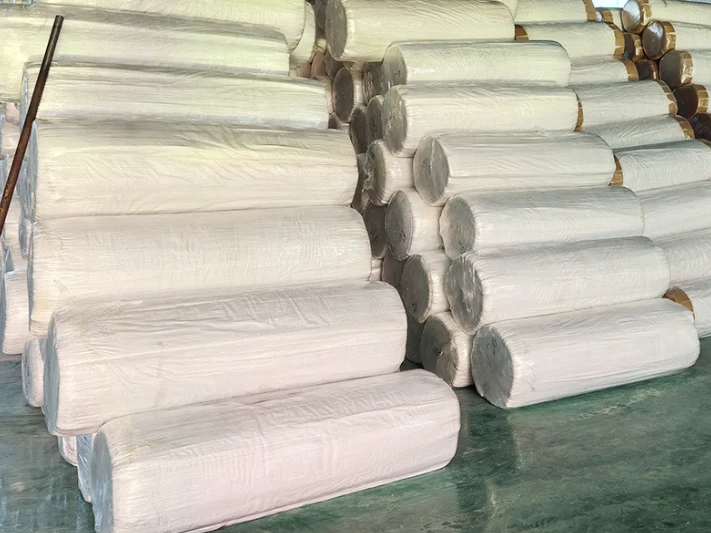
Aerogel Blanket products are commonly used to insulate pipes, tanks, valves, and industrial equipment. Their flexible structure allows them to fit around curved surfaces and irregular components while providing thermal insulation in relatively limited spaces.
Their service life depends on operating temperature, compression, moisture exposure, and the condition of the outer protective layer. On outdoor pipelines, damaged cladding or poorly sealed joints can expose the insulation to rain and environmental contaminants.
To maintain performance, the blanket should be installed according to the manufacturer's instructions, with appropriate coverage around elbows, flanges, supports, and connection points. Regular inspection can help identify damaged sections before they affect the wider insulation system.
Aerogel Panels for Buildings and Equipment
Aerogel Panel products are suitable for applications requiring a relatively thin insulation layer. Their durability depends on panel construction, facing materials, fixing methods, and environmental exposure.
In buildings, moisture entering through poorly sealed joints can affect surrounding materials and contribute to condensation problems. In industrial equipment, vibration and repeated mechanical loading may damage panel edges or bonded interfaces.
Selecting a panel requires consideration of dimensional stability, mechanical properties, humidity, and operating temperature. The durability of the complete assembly matters as much as the properties of the panel itself.
Aerogel Fabrics and Powder
Aerogel Fabric products and flexible composites may be used where insulation must accommodate particular shapes or installation requirements. Repeated bending, abrasion, and compression can affect their structure, depending on the reinforcement and protective layers.
Aerogel Powder is different from a finished blanket or panel. It may be incorporated into coatings, composites, and other formulations. Its long-term performance depends on the binder, dispersion process, chemical compatibility, and stability of the finished product. The lifespan of a powder-containing composite therefore cannot be determined from the powder specification alone.
Five Factors That Affect Aerogel Service Life
Operating Temperature
Continuous exposure to elevated temperatures can affect the aerogel structure, reinforcing materials, binders, and protective layers. Repeated heating and cooling may also cause different components to expand and contract at different rates.
The recommended continuous operating temperature should be distinguished from short-term temperature limits. Thermal cycling tests can help identify shrinkage, cracking, delamination, or changes in thermal conductivity under repeated temperature fluctuations.
Moisture and Humidity
Moisture can enter insulation systems through damaged cladding, open seams, condensation, or poorly sealed penetrations. Although some aerogel products have water-repellent treatments, water resistance varies by formulation and should be verified through product-specific testing.
Water absorption, water repellency, and water vapor transmission are different properties. Understanding these distinctions is important when selecting materials for outdoor pipelines, humid environments, and equipment exposed to condensation.
Compression and Mechanical Stress
Excessive compression may reduce insulation thickness and affect thermal performance. Vibration, impact, and repeated handling can damage blankets, crack rigid panels, or loosen installation components.
The required mechanical properties depend on the application. Compression behavior, dimensional stability, tensile strength, and resistance to handling damage may all be relevant when evaluating long-term suitability.
Installation and Protective Layers
Incorrect installation can shorten the service life of an otherwise suitable aerogel product. Uneven coverage, poorly fitted joints, excessive compression, and unsuitable fastening methods can create weak points in the insulation system.
Protective cladding and facings should match the surrounding conditions. Outdoor installations may require protection against rain, ultraviolet exposure, impact, and corrosion-related risks. Particular attention should be given to joints, supports, valves, and access points.
Material Composition and Manufacturing Consistency
Aerogel blankets, panels, fabrics, and powder have different structures and performance requirements. Variations in density, thickness, fiber distribution, binder content, or composite construction can influence the properties of the finished product.
Consistent manufacturing specifications help maintain uniform dimensions and material characteristics. Technical data sheets, batch identification, dimensional tolerances, and relevant test reports provide useful information when assessing product consistency.
Does Aerogel Lose Its Insulation Performance Over Time?
Aerogel does not automatically lose its insulation performance simply because it has been in service for a certain number of years. Changes depend on the material, exposure conditions, and physical condition of the insulation system.
For example, a blanket that remains dry, maintains its thickness, and is protected from mechanical damage may behave differently from one exposed to repeated compression or moisture ingress.
Thermal conductivity is a key parameter for evaluating insulation performance. However, measurements should be compared under consistent conditions because temperature, moisture content, density, and specimen preparation can affect the results.
Accelerated aging and thermal cycling tests can reveal potential degradation mechanisms, but they do not automatically establish an exact service life in years. Long-term estimates should also consider product-specific durability data and field performance records where available.
How to Extend the Service Life of Aerogel Insulation
Several practical measures can help preserve insulation performance:
- Choose suitable materials: Match the product type and specifications to the operating temperature, humidity, and installation environment.
- Follow installation requirements: Avoid excessive compression and ensure proper coverage around joints, bends, and connection points.
- Protect against moisture: Maintain cladding, seal exposed joints, and investigate signs of water ingress.
- Inspect regularly: Check for damaged surfaces, loose fasteners, deformation, and deteriorated protective layers.
- Repair the underlying problem: Identify the cause of damage before replacing or covering the affected section.
Inspection frequency should reflect the severity of the operating environment. Systems exposed to frequent temperature cycling, vibration, or outdoor weather may require more frequent checks than installations operating under stable conditions.
Why Choose Runfew for Aerogel Materials?
Zhejiang Runhui New Materials Co., Ltd. offers aerogel-related materials, including Aerogel Blanket, Aerogel Panel, Aerogel Fabric, and Aerogel Powder.
Product Options: Different material forms support different insulation structures, installation methods, and application requirements.
Custom Specifications: Product dimensions and specifications can be discussed according to project requirements and the intended application.
Production and Specification Control: Clear dimensional requirements, technical documentation, and agreed inspection criteria help maintain consistency during production and delivery.
Application-Based Selection: Operating temperature, moisture exposure, mechanical stress, and installation conditions should be considered when selecting an aerogel material for long-term use.
Before selecting a product, its technical specifications, applicable test results, and suitability for the intended environment should be confirmed.
FAQ
Yes. Depending on its composition and environment, an aerogel product may experience structural changes, moisture-related problems, mechanical damage, or deterioration of binders and protective layers.
It may be possible under suitable conditions, but a lifespan of 20 years or longer should not be assumed for every product. Product-specific durability data and operating conditions are needed to support such an estimate.
The effect depends on the formulation and construction. Some products resist liquid water, but moisture entering through damaged joints or protective layers may compromise the complete insulation system.
Relevant information includes thermal conductivity, operating temperature limits, dimensional stability, moisture-related properties, mechanical test results, and aging data. Testing should reflect the intended application.