Extremely Low Thermal Conductivity: Silica aerogel has a very low thermal conductivity, almost on par with air, which allows it to effectively block heat transfer through conduction.
Lightweight: Aerogels are extremely light, with densities lower than that of water. This makes them highly suitable for applications where weight is a critical factor.
Transparency: Silica aerogels are often transparent, which means they can be used in applications where light transmission is necessary, in addition to providing insulation.
High Temperature Resistance: Silica aerogels can withstand very high temperatures, often exceeding 1000°C, making them ideal for high-temperature protection applications.
Water Repellent: Aerogel coatings exhibit some hydrophobic properties, preventing water from penetrating and maintaining their insulating properties.
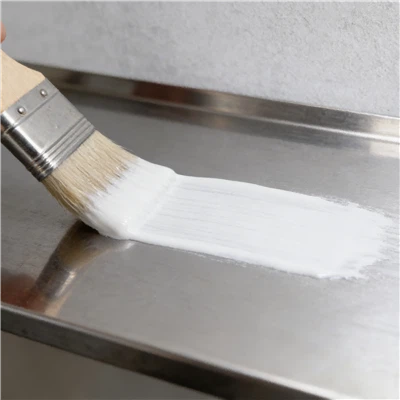
Easy to Apply: The aerogel can be applied as a coating, making it easy to coat on various substrates, even those with complex shapes or surfaces.
| Performance Category | Aerogel Coating | Traditional Insulation Materials |
| Thermal Insulation Performance | Thermal conductivity 0.03W/(M-K). 3Dnetwork porestructure for better insulation effect. | Polyurethane board: ~0.035W/(M.K); Rock wool board:0.035-0.047W/(M.K) |
| Fire Rating | Generally Grade A or A2, low risk. Classified as Grade Afireproof and flame-retardant material. | Polyurethane board and polyurethane foam usually havelow fire ratings; Rock wool board is Grade A, but somenon-compliant products pose risks |
| Construction Convenience | Can be applied by spraying, brushing, troweling, etc.Simple construction, low skill requirements for workers,adaptable to different substrate structures and surfaceshapes | Requires cutting, splicing, fixing and other complexprocedures; has certain skill requirements for constructionworkers |
| Thinness & Lightness | Only ~1-2 mm thick, saves space and reduces buildingload | Usually 30-50 mm thick, or even thicker |
| Waterproof & Moisture Resistance | Water repellency up to 99% or more, not prone to waterabsorption and moisture | Some insulation boards require waterproofing; insulationperformance decreases after water absorption |
| Service Life | Up to10-15 years or more, some data even claims 30years | Affected by factors such as base wall treatment andadhesive quality; may experience problems like falling offafter a few years, affecting service life |
Applications of aerogel thermal insulation coatings

Petrochemical Industry
Aerogel coatings are used for thermal insulation of crude oil and asphalt tanks to ensure fluid flow, and for insulating tanks containing low-temperature media and refined oil to reduce evaporation and maintain pressure safety.

Steel and Ceramics Industry
Aerogel coatings, with a temperature resistance of 500 to 1200°C, are used in various high-temperature furnace equipment applications, effectively solving high-temperature thermal protection problems.

Power plant turbine body
The energy-saving insulation modification utilizes aerogel coatings in combination with conventional insulation products, resulting in significant energy savings at a lower cost.

Basement damp-proofing
A 2mm-thick aerogel coating can prevent mold and delamination on basement walls caused by condensation during damp weather. It controls temperature differences and reduces condensation in humid environments.
FAQ
1.What is the primary use of thermal insulation coatings?
Thermal insulation coatings are primarily used to reduce heat transfer, maintaining stable temperatures. They are widely used in buildings, industrial equipment, piping systems, and transportation facilities, especially in situations where energy efficiency, heat retention, or preventing heat loss is crucial.
2.What is the maximum temperature that thermal insulation coatings can withstand?
Most thermal insulation coatings can withstand high temperatures up to 300°C or more. Some specialized coatings are designed to endure even higher temperatures. The specific temperature resistance depends on the coating composition and the application environment.
3.Does the coating have waterproof properties?
Many thermal insulation coatings are designed to be water-resistant and can effectively prevent moisture from affecting equipment or buildings, thereby extending their service life. However, the exact waterproof capabilities depend on the type of coating.
4.How is the application of thermal insulation coatings performed?
Thermal insulation coatings are usually applied by spraying, brushing, or rolling. The process is relatively simple and quick. Once the coating dries, it forms a durable protective layer, and the installation process causes minimal disruption to ongoing operations.
Hot Tags: thermal insulation coating, China thermal insulation coating manufacturers, suppliers, factory, Aerogel Thermal Insulation Coating, Aerogel Coatings, Aerogel Coating Price, Aerogel Powder Coating, Aerogel Car Coating, Aerogel Thermal Coating