Extremely Low Thermal Conductivity: Silica aerogel has a very low thermal conductivity, almost on par with air, which allows it to effectively block heat transfer through conduction.
Lightweight: Aerogels are extremely light, with densities lower than that of water. This makes them highly suitable for applications where weight is a critical factor.
Transparency: Silica aerogels are often transparent, which means they can be used in applications where light transmission is necessary, in addition to providing insulation.
High Temperature Resistance: Silica aerogels can withstand very high temperatures, often exceeding 1000°C, making them ideal for high-temperature protection applications.
Water Repellent: Aerogel coatings exhibit some hydrophobic properties, preventing water from penetrating and maintaining their insulating properties.
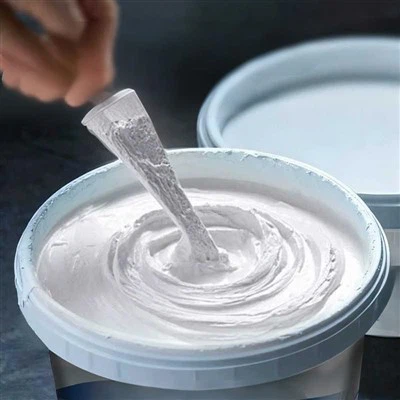
Easy to Apply: The aerogel can be applied as a coating, making it easy to coat on various substrates, even those with complex shapes or surfaces.
| Performance Data | Thermal Conductivity | w/(m.k) | 0.045 |
| Vertical Tensile Strength | MPa | 0.5 | |
| Dry Density | kg/m3 | 200~250 | |
| Consumption per Unit Area | kg/m2.mm | 1~1.2 | |
| Service Temperature | ℃ | 200 | |
| Application Temperature | ℃ | 5~50 | |
| Single Coating Thickness | mm | 4 | |
| Volume Shrinkage Ratio | % | 5 | |
| Fire Performance | Class | A | |
| Shelf Life | / | 6 months | |
| Drying Time | h | For 2mm coating: At room temp: Surface drys8h, Hard drys48h; At 80C high temp: Surface drys2h, Hard drys4h. |


Thermal Insulation Principle
Suppression of Gas Conduction: The structure of aerogel contains numerous tiny pores, which are typically filled with gases like air. Gases have much lower thermal conductivity than solids, and these pores significantly reduce the path for heat to be conducted, drastically lowering the overall thermal conductivity of the material.
Low Density and Void Effect: Due to its extremely low density, most of the aerogel's volume consists of voids or empty space. This restricts the pathways for heat transfer, and even in high-temperature environments, the aerogel continues to reduce heat conduction effectively.
Multiple Scattering Effect: Because of its porous nature, heat radiation within aerogel is scattered multiple times. This scattering effect further reduces the passage of thermal radiation, which enhances its thermal insulation performance.
Solid-Gas Interface Effect: The pore size and structure of the aerogel make it difficult for heat to travel through the solid-gas interfaces. The interface between the solid surface and the gas creates an effective thermal barrier, further boosting its insulating properties.
Application Instructions
1.During application, the substrate surface must be pre-treated to ensure it is free of oil and other particles.
2.When spraying, the thickness of each coat should not exceed 1mm. After the coating has cured and dried, apply a second coat, and so on, until the desired thickness is achieved.
3.Store at room temperature away from light; do not freeze or expose to direct sunlight. After use, seal the container to prevent drying and hardening.
4.If the paint is too viscous or slightly hardened during application, add water and stir to dilute. The amount of water added should not exceed 10% of the paint weight.
5.Allow 6-8 hours for surface drying. Please allow sufficient drying time and protect the finished product.
6.The paint has high viscosity; do not over-dilute during use to avoid affecting application.
7.For strong adhesion, a commercially available primer can be applied first.
8.If a specific appearance is required, other water-based materials can be applied to the surface of the already coated material.
Hot Tags: silica aerogel thermal insulation coating, China silica aerogel thermal insulation coating manufacturers, suppliers, factory, Aerogel Coatings, Aerogel Thermal Insulation Coating, Aerogel Coating Price, Aerogel Powder Coating, Aerogel Thermal Coating, aerogel coating