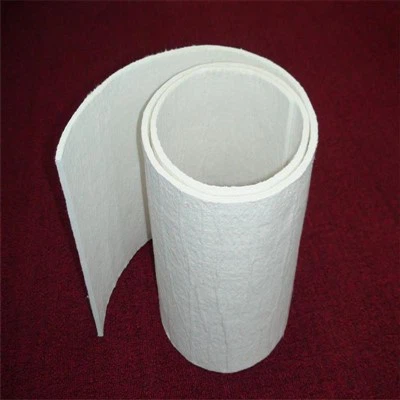
1. Flexibility and cutting: Aerogel thermal insulation blanket has good flexibility, similar to ordinary blankets, can be easily bent, folded, and can be tightly fitted to the surface of various complex shapes, without complex cutting and splicing like traditional thermal insulation materials. In the heat insulation treatment of some special-shaped pipes and equipment, the aerogel heat insulation blanket can be directly wrapped, which greatly saves the installation time and labor costs. At the same time, it is easy to cut, and can be accurately cut according to actual needs, reducing material waste.
2. Maintenance and durability: The chemical stability and anti-aging properties of the aerogel thermal insulation blanket make it unnecessary to frequent maintenance and replacement during long-term use. In contrast, traditional insulation materials such as silicate fiber felt, under the influence of long-term wind and sun exposure, temperature changes and other environmental factors, prone to powder, falling off and other problems, the need for regular inspection and maintenance, increasing the cost of use and workload.

Fiberglass Aerogel Blanket application In architecture
1. Bottom floor: In the construction of the bottom floor of the building, it can be laid between the ground base and the floor surface layer to prevent the heat or cold air in the soil from entering the room, improve the thermal insulation performance of the ground, and make the room more warm and comfortable, especially for buildings in cold areas.
2. High-rise building curtain wall: In the glass curtain wall of high-rise buildings, it can be installed in the curtain wall keel, which can block the cold and hot bridge to the greatest extent in a small space, reducing the risk of heat loss and condensation. For example, the glass curtain wall metal frame of the first phase of Xianyang Airport is caulking, and the aerogel curtain wall thermal insulation blanket is selected, which increases the thermal insulation performance of the building without affecting the lighting and beautiful conditions.
3. Slope roof: For slope roof buildings, it can be installed between the rafters of the roof or above the suspended ceiling to prevent the heat from being transferred to the interior through the roof structure. In some traditional building protection and renovation projects, the use of aerogel thermal insulation blanket can not only maintain the original appearance of the building, but also improve its thermal insulation performance.
4. Fire partition isolation: In the fire partition design of the building, the aerogel insulation blanket can be used as a part of the fire isolation belt and installed in the firewall, fire door and other parts to improve the heat insulation and fire performance of the fire partition and prevent the spread of fire and heat.
Products FAQ
1. What should I do if there is a powder problem in the construction process?
It is common for aerogel felt to have a small amount of powder loss during construction. This is mainly due to the special structure of the aerogel material, some loose particles may fall off. The first solution is that in the post-processing stage of the finished product, the coating of glass fiber cloth and the addition of closed coating are used to prevent the powder from falling off; The second is to improve the production process, such as optimizing the combination process of aerogel and fiber, enhancing the adhesion between the two, thereby reducing the powder problem. During the construction process, appropriate protective measures can also be taken, such as wearing masks and shielding the construction area to reduce the impact of dust on the environment and personnel.
2. How to deal with splicing gaps?
When the heat insulation blanket is spliced, the gap treatment is crucial to ensure that the heat insulation effect is not affected. It is recommended to use a high-quality, matching aerogel special binder, which can be well combined with the aerogel insulation blanket to fill the gap and reduce the heat transfer through the gap. Apply the binder evenly and fully to ensure that the gap is completely sealed. For a large area of splicing, a strengthening belt similar to the material of the aerogel heat insulation blanket can also be covered at the gap to further enhance the sealing effect and the overall structural strength.
3. What are the special requirements for construction?
Before construction, ensure that the construction surface is smooth, dry, and clean, and free of impurities such as oil and dust. Due to the relatively soft texture of the insulation blanket, attention should be paid to avoid scratching and tearing during construction, and the operation should be gentle. During the installation process, it is necessary to ensure that the heat insulation blanket closely fits the surface of the covered object, leaving no gaps. For objects with irregular shapes, it is necessary to cut and splice according to the actual situation. In addition, different application scenarios and parts, such as building external walls, industrial pipelines, etc., have their own corresponding construction specifications and requirements, and must be strictly operated in accordance with the specifications to achieve the best insulation effect.
4. What is the material, does it contain toxic and harmful substances?
Aerogel thermal insulation blanket is mainly based on aerogel as the core thermal insulation material, common aerogel such as silica aerogel, itself non-toxic and harmless. The reinforcing material is usually glass fiber or other high performance fiber, which also does not release harmful substances under normal use. Formaldehyde, benzene and other harmful chemicals are not added in the production process, which meets environmental standards and is friendly to human health and the environment.
5. Is it waterproof? Does insulation suffer in humid environments?
Aerogel itself has a certain hydrophilicity, but through special processing, such as surface modification or adding hydrophobic agents, aerogel thermal insulation blanket can have good waterproof performance. In a humid environment, as long as its waterproof structure is not damaged, it will not cause a significant decrease in heat insulation performance due to water absorption. Because even if a small amount of water enters, the nanoporous structure of the aerogel can still block heat transfer and maintain good insulation effect. However, long-term exposure to water or high humidity and poor ventilation environment may have a certain impact on its outer structure, which indirectly affects the thermal insulation performance, so try to avoid use in such an extreme humid environment.
Hot Tags: insulation blanket aerogel, China insulation blanket aerogel manufacturers, suppliers, factory, 3mm Fiberglass Aerogel Blanket, fiberglass aerogel blanket, 2mm Fiberglass Aerogel Blanket, 5mm Fiberglass Aerogel Blanket, 6mm Fiberglass Aerogel Blanket, 10mm Fiberglass Aerogel Blanket