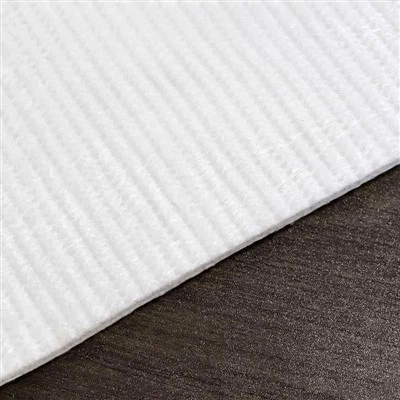
Product Feature
Ultra-low thermal conductivity:Typical thermal conductivity ranges from 0.013 to 0.020 W/(m·K), significantly lower than conventional insulation materials.
Excellent flexibility and workability:Easily cut, bent, wrapped, and installed, suitable for pipes, valves, flanges, and irregular equipment.
Wide operating temperature range:Suitable for long-term use from −200°C to 650°C; high-temperature grades can withstand short-term exposure up to 800–1000°C.
Lightweight and space-saving:Low density and high insulation efficiency allow reduced insulation thickness and overall system weight.
Outstanding fire performance:Typically non-combustible, resistant to flame impingement, with low smoke generation.
Hydrophobic and moisture-resistant:Treated with hydrophobic agents to minimize water absorption and maintain thermal performance in humid conditions.
Long-term stability:Resistant to aging, shrinkage, and powdering, offering a longer service life than traditional fibrous insulation.


application
Oil & Gas / Petrochemical Industry – High-temperature thermal insulation for pipelines, vessels, reactors, heat exchangers, and processing units in oil, gas, petrochemical, and refining facilities.
Cryogenic & LNG Industry – Cryogenic insulation for LNG pipelines, storage tanks, cold boxes, and systems handling liquid nitrogen, liquid oxygen, and other cryogenic media.
Power Generation & Energy Industry – Thermal insulation and fire protection for power plants, nuclear facilities, energy storage systems, batteries, and renewable energy equipment.
Marine & Offshore Industry – Fire-resistant and thermal insulation for offshore platforms, shipboard pipelines, engine rooms, and marine structural components.
Industrial Buildings & Construction Industry – Energy-efficient and space-saving insulation for industrial buildings, factories, and retrofit projects with limited installation space.
Aerospace & Rail Transportation Industry – Lightweight and high-performance insulation for aerospace components, rail transit systems, and other applications with strict weight and space constraints.
FAQ
What is the main difference between flexible aerogel blankets and conventional insulation such as mineral wool or ceramic fiber?
Aerogel blankets provide much lower thermal conductivity, enabling thinner and lighter insulation for the same thermal performance.
Is the material fragile or prone to dusting?
Reinforced with fibrous substrates, flexible aerogel blankets are durable and generate minimal dust under normal handling and installation.
What is the maximum operating temperature?
Standard products are rated up to 650°C for continuous use, with higher-temperature grades available for short-term exposure.
Is the material waterproof, and does moisture affect performance?
The material is hydrophobic and resists water absorption; however, protective cladding is recommended for prolonged outdoor exposure.
Can it be used outdoors?
Yes, outdoor use is possible when combined with appropriate mechanical and weather protection.
Hot Tags: flexible aerogel blanket insulation, China flexible aerogel blanket insulation manufacturers, suppliers, factory, 3mm Fiberglass Aerogel Blanket, fiberglass aerogel blanket, 6mm Fiberglass Aerogel Blanket, 5mm Fiberglass Aerogel Blanket, 2mm Fiberglass Aerogel Blanket, 10mm Fiberglass Aerogel Blanket