

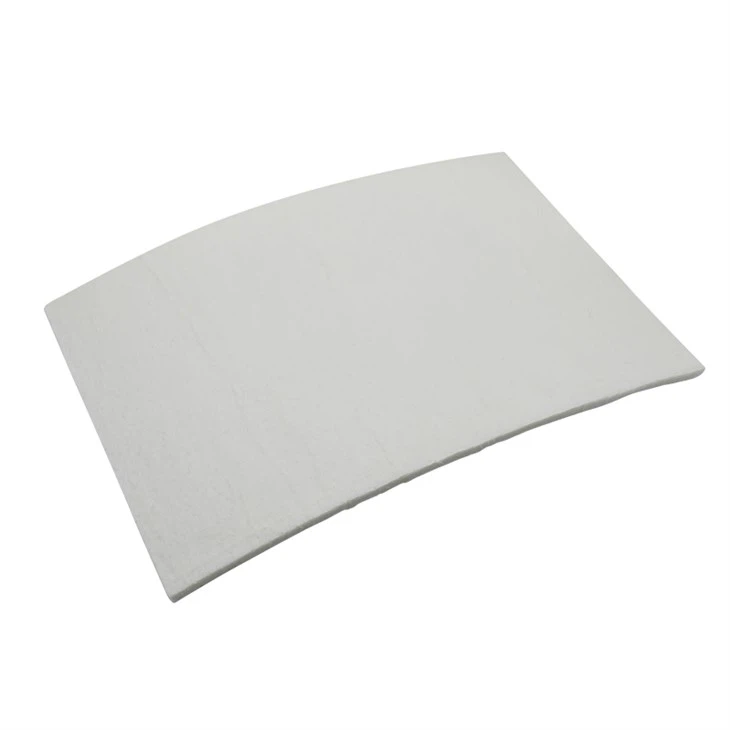
Fiberglass Aerogel Blanket Material Composition And Structural Design
Core material composition
Aerogel:
It is composed of a nano-scale porous network structure with a porosity of up to 80%~99%. Air can hardly convect in the nanopores, making its thermal conductivity extremely low (as low as 0.013 W/(m・K) or less at room temperature). It is one of the materials with the best thermal insulation performance among the known solid materials. Aerogel is mainly used as a "thermal barrier" in this product to block heat conduction and radiation.
Fiberglass:
It uses glass fiber yarn or cloth as a skeleton. It has the characteristics of high strength, high temperature resistance (conventional glass fiber can withstand temperatures of more than 500℃, and high silica fiber can withstand temperatures of 1000℃), and good chemical stability (corrosion resistance and non-flammability), providing structural support and flexibility for the insulation blanket.
Composite structure design
Aerogel is combined with a glass fiber substrate through a special process (such as impregnation, coating or particle filling) to form an "aerogel-glass fiber" composite layer. Common forms include:
Layered composite: aerogel coating is covered on the surface of glass fiber cloth, or sandwiched between multiple layers of glass fiber;
Filled composite: aerogel particles are evenly dispersed in the pores of the glass fiber woven structure to form an integrated insulation layer.
This structure not only retains the mechanical properties of glass fiber, but also utilizes the nano-insulation properties of aerogel to achieve the dual advantages of "lightweight + efficient insulation".
| Aerogel Blanket Physical Properties | |
| Thermal Conductivity (25°C) | 0.015 - 0.057 W/m.k |
| Type | Roll or Mat |
| Temperature Range | \-200°C to 650 °C |
| Hydrophobicity | ≥99.5 |
| Width | 150cm |
| Density | ≤200 kg/m3 |
| Tensile Strength | 800-1000 Kpa |
| Combustion Performance Grade | A |
Core Advantages Of Aerogel Blanket
Extreme thermal insulation performance
The thermal conductivity is much lower than that of traditional thermal insulation materials (such as rock wool and glass fiber felt).
It has strong barrier ability to thermal radiation. The nanoporous structure of aerogel can reflect most infrared radiation. Combined with the high temperature resistance of glass fiber, it is suitable for thermal insulation of high temperature heat sources (such as industrial furnaces, pipelines, and engine compartments).
Lightweight and flexibility
The density is low (usually ≤200 kg/m³), which is about 1/3~1/2 of traditional ceramic fiber blankets, which reduces the load of equipment and is especially suitable for weight-sensitive scenes such as aerospace and transportation.
It can be bent and folded, which is convenient for wrapping equipment with complex shapes (such as valves, elbows, and special-shaped pipes). No special tools are required during installation, and the construction efficiency is high.
High temperature resistance and safety characteristics
The temperature resistance range is wide. Conventional products can withstand high temperatures of 200~600℃. Special models (such as high silica glass fiber + aerogel) can withstand high temperatures above 800℃, and are non-flammable and do not release toxic gases. They meet fire protection standards such as UL94 V-0.
Strong chemical stability, acid and alkali corrosion resistance, moisture resistance (some products need to be equipped with waterproof coating), suitable for outdoor or corrosive environment.
Long-lasting durability and environmental protection
Long-lasting durability and environmental protection
The combination of aerogel and glass fiber is not easy to age, vibration and tear resistance, and has a long service life (up to 10 years or more);
The material does not contain harmful substances such as formaldehyde and asbestos, and complies with environmental protection standards such as EU REACH and US ASTM. There is no dust pollution during construction and it is safe for the human body.
Comparison With Traditional Insulation Materials
| Comparison Item | Aerogel Fiberglass Insulation Blanket | Traditional Fiberglass Mat/Rock Wool |
| Thermal Conductivity | Extremely low (0.015–0.03 W/(m·K)) | Relatively high (0.04–0.07 W/(m·K)) |
| Maximum Service Temperature | 600–800°C (higher for special models) | 300–500°C |
| Density | Lightweight (100–300 kg/m³) | Medium (60–100 kg/m³, requires increased thickness) |
| Flexibility & Installation | Bendable, suitable for complex shapes | Moderate flexibility, higher installation difficulty |
| Service Life | Over 10 years (anti-aging) | 5–8 years (prone to moisture absorption and pulverization) |


Precautions For Use
Waterproof treatment: If used outdoors or in a humid environment, it is recommended to use waterproof surface layers such as aluminum foil and silicone rubber to prevent the thermal insulation performance of the aerogel from decreasing after absorbing water;
Cutting and protection: It is recommended to wear dust masks and gloves during construction. Although there is no asbestos, the glass fiber dust may irritate the skin;
Joint treatment: When laying multiple layers, the seams must be staggered and overlapped, and fixed with high-temperature tape or straps to prevent thermal bridge effects;
Temperature matching: Select products with corresponding temperature resistance levels according to the actual use temperature to avoid long-term overheating and material performance degradation.
FAQ:
Which high-temperature scenarios is this insulation blanket suitable for? What is the temperature range?
It is suitable for medium and high temperature environments of 200~800℃, and typical scenarios include:
Industrial field: Insulation of high-temperature pipelines, reactors, industrial kilns, and steam turbines in power plants;
Transportation field: Insulation of automobile engine compartments, new energy vehicle battery packs, and aircraft engines;
Construction and energy: Insulation of passive house exterior walls, solar thermal storage equipment, and thermal management of data center cabinets.
Conventional models are resistant to temperatures of 600℃, and special high-silica glass fiber composite models can withstand temperatures above 800℃, and are non-flammable and non-toxic gas release.
What are the conveniences in installation and use? Is it suitable for special-shaped equipment?
It has two major installation advantages:
Strong flexibility: It can be bent and folded, and can tightly wrap complex shapes such as valves, elbows, irregular pipes, etc., without the need for customized molds, and has high construction efficiency;
Lightweight and easy to operate: Low density (100~300 kg/m³), can be carried by one person, fixed with high-temperature tape or straps, and can be overlapped at the joints, reducing the reliance on professional tools.
But please note: A waterproof surface layer (such as aluminum foil) is required in humid environments, and protective equipment should be worn during construction to avoid glass fiber dust irritating the skin.
Hot Tags: aerogel fiberglass insulation blanket, China aerogel fiberglass insulation blanket manufacturers, suppliers, factory, 6mm Fiberglass Aerogel Blanket, 3mm Fiberglass Aerogel Blanket, 5mm Fiberglass Aerogel Blanket, 10mm Fiberglass Aerogel Blanket, fiberglass aerogel blanket, 2mm Fiberglass Aerogel Blanket


