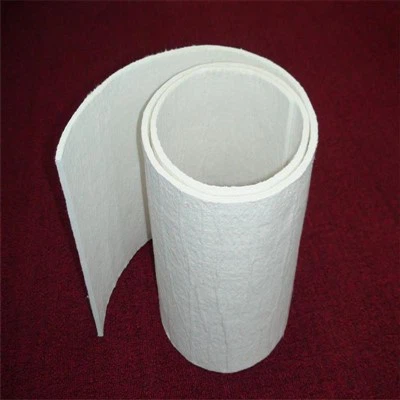
Key Features of Fiberglass Reinforced Aerogel Blanket
Ultra-Low Thermal Conductivity: Significantly reduces heat transfer compared to conventional insulation materials.
High Temperature Resistance: Effective in applications up to 650°C, making it suitable for industrial furnaces and pipelines.
Durable Mechanical Strength: Reinforced with fiberglass, providing flexibility and resistance to compression and vibration.
Hydrophobic and Moisture Resistant: Maintains insulation performance even in humid or wet conditions.
Lightweight and Flexible: Easy to cut, handle, and install, reducing labor and transportation costs.
Environmentally Friendly: Low dust release, safe for workers, and recyclable material options.
Advantages Over Traditional Insulation Materials
Compared with traditional insulation products like mineral wool or calcium silicate, the fiberglass aerogel blanket provides:
2–5 times better thermal performance at the same thickness.
Thinner insulation layers, reducing overall space requirements.
Lower installation and maintenance costs due to flexibility and durability.
Superior resistance to water and chemicals, extending service life.
Specifications
Material Composition: Silica aerogel + fiberglass reinforcement
Thermal Conductivity: As low as 0.02 W/m·K
Operating Temperature Range: -200°C to +650°C
Thickness Options: 3mm, 5mm, 10mm, or customized
Density: 180–220 kg/m³
Color: White or light grey
Hydrophobicity: ≥99% water repellence
Packaging: Rolls or sheets, wrapped in moisture-proof film
Product pictures & company introduction


FAQ:
1. What makes fiberglass aerogel blanket better than traditional insulation materials?
Unlike conventional materials such as mineral wool or calcium silicate, aerogel blankets provide 2–5 times better thermal performance at the same thickness. This means you can achieve superior insulation with thinner layers, saving space and reducing overall project costs. In addition, the combination of aerogel and fiberglass reinforcement ensures excellent mechanical strength, durability, and resistance to harsh industrial conditions.
2. How does this aerogel blanket help reduce operational costs?
The ultra-low thermal conductivity of aerogel significantly minimizes heat loss, which translates into reduced energy consumption in industrial systems. By maintaining stable thermal performance even under high temperatures and wet environments, the blanket decreases the need for frequent replacements and maintenance. This long service life and lower energy loss directly reduce operational costs in industries such as oil refining, power generation, and LNG transportation.
3. Is fiberglass reinforced aerogel blanket suitable for extreme environments?
Yes, it is specifically designed for harsh and demanding applications. With an operating temperature range from -200°C to +650°C, it performs equally well in cryogenic systems and high-temperature processes. Its hydrophobic properties prevent water absorption, making it reliable in offshore, marine, and humid environments. Whether exposed to vibration, compression, or chemical contact, the blanket maintains its insulation efficiency and structural integrity.
Hot Tags: fiberglass reinforced aerogel blanket, China fiberglass reinforced aerogel blanket manufacturers, suppliers, factory, 10mm Fiberglass Aerogel Blanket, 2mm Fiberglass Aerogel Blanket, fiberglass aerogel blanket, 5mm Fiberglass Aerogel Blanket, 6mm Fiberglass Aerogel Blanket, 3mm Fiberglass Aerogel Blanket