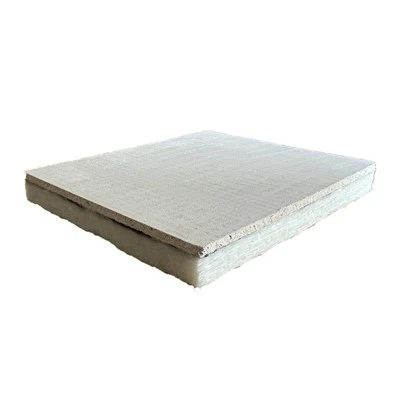
🚀 Technological breakthrough solution: Integrating aerospace-grade thermal insulation performance with the economic applicability of industrial scenarios, redefining the thermal insulation standard in extreme environments.
🌌 Cross-scenario all-round performance: From the ultra-low temperature deep space protection of the Mars rover to the energy efficiency improvement of the high-temperature pipelines in the chemical plant, taking into account the stable thermal insulation needs under extreme temperature differences.
🔒 Reliability and versatility coexist: Whether it is cryogenic equipment exposed to -200°C for a long time, or industrial furnaces that continuously withstand +650°C, they can maintain stable performance and adapt to complex working conditions in multiple fields.
🌟 Next-generation thermal insulation benchmark: Breaking the performance bottleneck of traditional thermal insulation materials with material innovation, setting a new industry benchmark in terms of lightweight, high efficiency and wide temperature adaptability, and promoting energy-saving and extreme environment technology upgrades.
Key Features
Extreme Temperature Resistance
Located in 27 Operates reliably from cryogenic (-200°C) to high-temperature (+650°C) conditions.
In aerospace applications like China's Tianwen-1 Mars rover, a 10mm-thick aerogel component successfully shielded equipment from 1000°C heat during landing and -130°C cold during surface exploration.
Superior Mechanical Design
The glass fiber-reinforced substrate addresses pure aerogel's brittleness, ensuring structural integrity without compromising insulation performance.
Rigid yet flexible, it can be easily cut and shaped for complex geometries, ideal for pipelines, furnaces, and industrial machinery.
Hydrophobic & Fire-Safe
Treated to achieve 99.8% hydrophobicity, preventing moisture ingress while allowing vapor diffusion to reduce corrosion risks.
Meets GB 8624-2012 Class A non-combustible standard, emitting no smoke during combustion-critical for fire-sensitive environments like EV battery compartments and industrial facilities.
Installation & Cost Efficiency
Lightweight design reduces transportation costs by 30–50% compared to traditional materials.
Thinner profile (10mm) achieves equivalent insulation to 30–50mm of conventional materials, saving space and installation time.


FAQ:
How does the 10mm thickness of the aerogel insulation panel compare to traditional insulation materials in terms of thermal insulation efficiency?
The 10mm aerogel insulation panel offers exceptional efficiency: its ultra-low thermal conductivity (18–23 mW/(m·K)) means it achieves the same or better insulation performance as 30–50mm of traditional materials like rock wool or aluminum silicate. This thin profile is especially valuable in space-constrained environments, such as industrial pipelines with limited clearance or EV battery compartments, where reducing thickness without sacrificing insulation is critical.
Is the 10mm aerogel insulation panel easy to cut and install on irregularly shaped surfaces?
Yes. Despite its structural strength, the 10mm panel remains flexible due to its glass fiber-reinforced composite design. It can be easily cut with standard tools (e.g., utility knives) and conforms well to curved or irregular surfaces-such as the contours of industrial furnace components or complex pipeline joints. This ease of installation reduces labor time by up to 30% compared to rigid traditional insulators.
Hot Tags: 10mm aerogel insulation panel, China 10mm aerogel insulation panel manufacturers, suppliers, factory, Aerogel Panels, Aerogel Sound Panels, Aerogel Insulation Board, Aerogel Insulation Wallboard, aerogel panel, Aerogel Insulation Sheet