

Key performance parameters
Temperature range: Ordinary silica aerogel cylinders can work stably at -200℃ to 650℃, special fiber-reinforced carbon series aerogels can withstand high temperatures of 1200-1600℃, and the high entropy aerogel developed by Zhejiang University can even exceed 2000℃.
Thermal conductivity: ≤0.020 W/(m・K) at 25℃, slightly increasing with increasing temperature (such as ≤0.045 W/(m・K) at 500℃).
Density: Usually 100-300 kg/m³, only 1/3-1/5 of traditional insulation materials, significantly reducing installation load.
| Property | Specification |
|---|---|
| Material | Silica Aerogel + Reinforced Composite Layer |
| Operating Temperature Range | -200°C to +650°C |
| Thermal Conductivity | ≤ 0.020 W/m·K (at 25°C) |
| Thickness Available | 3mm to 20mm |
| Water Absorption | <1.5% |
| Fire Rating | A1 Non-Combustible (EN 13501) |
| Customization | Tailored to drawings or samples |
Fire resistance: non-combustible (Class A fire resistance), can withstand direct burning by open flames.
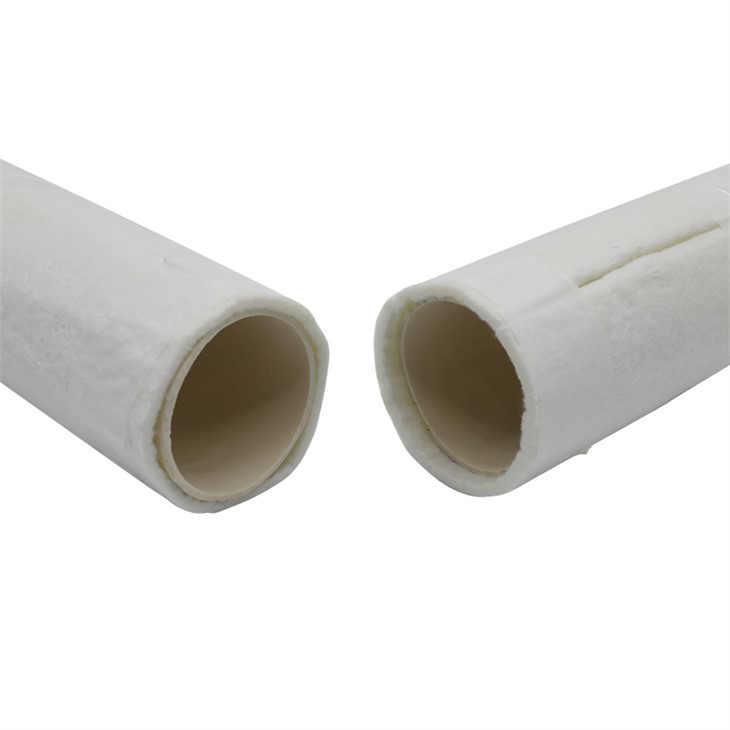
Inner layer: aerogel core material provides basic thermal insulation;
Middle layer: glass fiber or ceramic fiber enhances mechanical strength to prevent aerogel from breaking;
Outer layer: metal foil (such as aluminum foil) or thermoplastic elastomer film (such as TPU) encapsulation provides waterproof, anti-corrosion and impact protection.
Some high-end products use a negative Poisson's ratio cylindrical spiral hole structure. When under pressure, the material shrinks toward the center to enhance deformation resistance.
Application fields
Industrial pipelines: high-temperature steam pipelines in the petrochemical industry (such as above 300℃), LNG cryogenic pipelines (-162℃), reducing heat loss by more than 50%.
New energy: 4680 large cylindrical battery cell packaging for electric vehicles, blocking the spread of thermal runaway and ensuring battery safety.
Aerospace field: Mars probe insulation components to cope with -130℃ extreme cold and 1000℃ landing high temperature.
Building energy saving: basement moisture and condensation prevention, exterior wall insulation thickness can be reduced by 75%.

Ultra-light and thin: With the same thermal insulation effect, the thickness is only 1/3 of that of traditional materials, saving space and reducing transportation costs.
Long life: Excellent aging resistance, service life of 15-20 years, 3-4 times that of traditional materials.
Versatility: It has fireproof, hydrophobic (water repellency > 99%), sound insulation and other characteristics.
Packaging & Delivery
Packaging
Wrapped and boxed for protection against moisture and mechanical damage.
Lead Time
7–15 working days depending on order volume and customization.
MOQ
Negotiable, depending on dimensions and complexity.
Why Choose Runhui?
Choose the factory that best suits your needs and get direct pricing without the middleman.
Industry-Proven Manufacturer
Over 10 years of aerogel R&D and manufacturing experience.
Strong Customization Capability
Fast prototyping and precise fitting based on CAD or on-site data.
Sustainable and Safe
Eco-friendly materials, free of asbestos and heavy metals.
Global Supply Experience
Serving OEMs, EPC contractors, and large industrial clients worldwide.
1. How do aerogel cylinders cope with extreme temperature environments?
Wide temperature range adaptation is achieved through material formulation optimization and structural design. For example, silica aerogel cylinders remain elastic in a deep cold environment of -200℃, while high-temperature aerogels with added silicon carbide fibers can withstand high temperatures of 1600℃. NASA found in a test of liquid hydrogen tanks that aerogel cylinders can reduce nitrogen adsorption by 2/3, significantly reducing heat conduction at low temperatures.
2: What key steps should be paid attention to during installation?
Surface treatment: Pipes need to be thoroughly cleaned and anti-corrosive to avoid corrosion under the insulation layer.
Tight fit: When cutting aerogel felt, the circumference must be accurately measured, the joints must be sealed with aluminum foil tape, and the seams must be staggered during multi-layer construction.
Fixing method: Tie with galvanized iron wire or fiberglass tape every 200-300mm, and fix the vibrating parts densely.
Dust protection: Construction workers need to wear dust masks and use HEPA filter vacuum cleaners to clean debris.
3: Compared with traditional insulation materials (such as glass wool), how economical is the aerogel cylinder?
Although the initial cost of aerogel cylinder is 2-3 times higher, the cost of the whole life cycle is lower. Taking petrochemical pipelines as an example, the annual energy saving after using aerogel can reach 3127.6 GJ (heat price 55 yuan/GJ), the investment can be recovered within 3 years, and the cost saving in a 10-year cycle exceeds 1.2 million yuan. In addition, the life of aerogel is more than 15 years, which reduces the replacement frequency and maintenance costs.
4: Can aerogel cylinders be used in humid or underwater environments?
Yes. Its hydrophobic modified aerogel core material (water repellency > 99%) can resist long-term water vapor erosion, and the outer metal foil or TPU film is further waterproof. For example, after a basement in Nanjing applied aerogel coating, there was no condensation on the wall during the rainy season. In underwater pipelines, aerogel cylinders combined with waterproof tape can achieve IP68 protection.
Hot Tags: aerogel thermal insulation cylinder, China aerogel thermal insulation cylinder manufacturers, suppliers, factory


